In the era of AI at its peak, gathering knowledge feels too easy. You’ve got Google AI overviews, ChatGPT answers, endless YouTube deep dives, Instagram reels, LinkedIn threads… so many voices.
And to explore SEO? It’s even crazier. Every blog screams a “must-do.” Some help. Others… just myths.
And the consequences: In 2025, poor SEO is sinking 90% of online businesses.
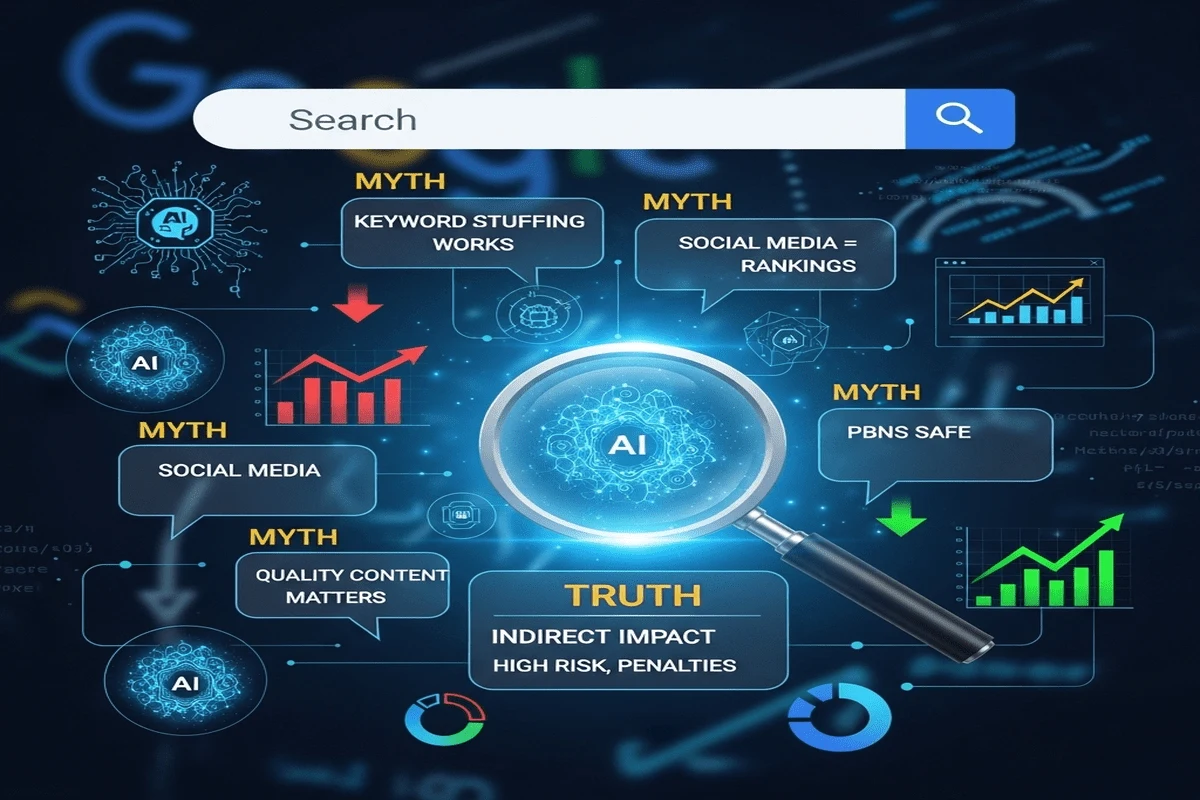
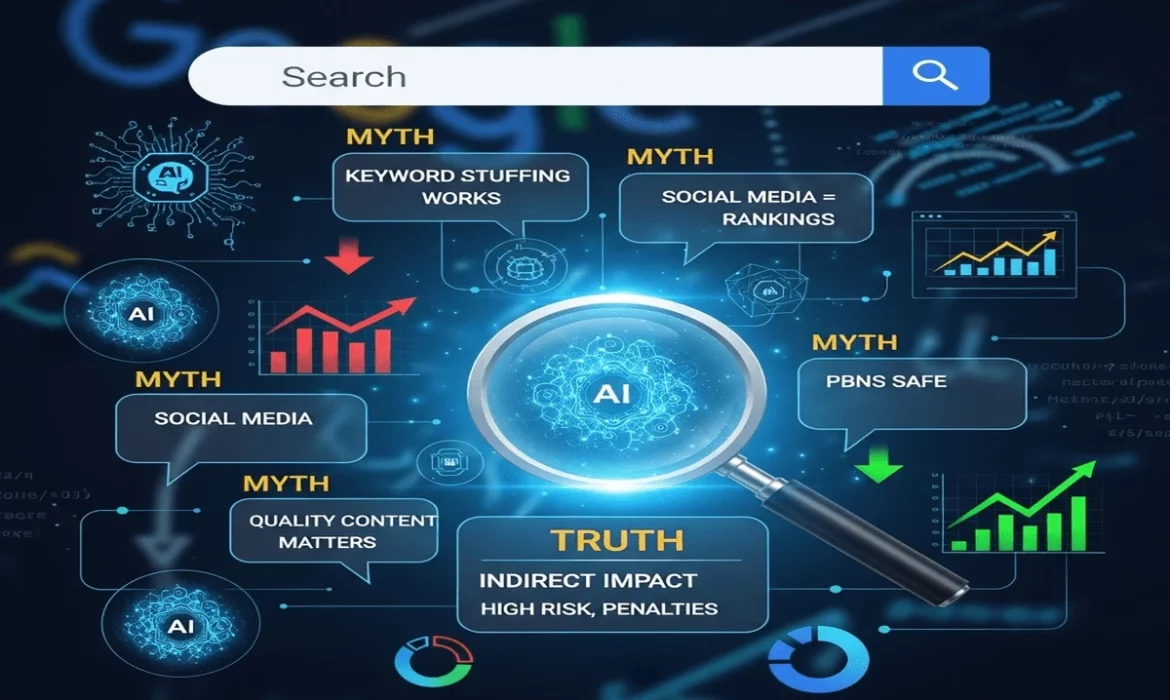
Ever try a tactic that flopped and left you wondering what went wrong? So let’s clear the fog. Here are five SEO myths that could be tanking your rankings.
Myth #1 – SEO Is Dead
SEO is dead. You’ve heard it a dozen times. TikTok gurus swear by it. LinkedIn posts scream, “Game over.” Because AI writes blog posts in seconds, voice assistants are now everywhere. Paid ads flood the top.
But here’s a reality check. Search still drives over 50% of web traffic. Google processes billions of queries every day. People still type questions, not just tap buttons.
So why do we say “SEO is dead”? It’s fear of change. Folks see AI content and think the old rules vanished overnight. They assume Google will bury everything that’s not new or supercharged.
Reality looks different. SEO’s not gone. It’s evolving. Algorithms get smarter. They reward real signals, like user intent, helpful content, and genuine engagement. If you chase shiny tactics, you’ll miss what matters.
What to do instead?
Pause the panic. Keep asking, “What problem am I solving?” Then answer it better than anyone else.
Combine AI tools with your own insights. Use AI to research data, then add your real-world experience. Freshen content, update stats, tweak headlines. Watch Google’s helpful content signals, like whether people are clicking, staying, or sharing.
SEO’s alive. It just wants more human touch. Ever built a page and forgot to revisit it a year later? Try giving it a refresh. That simple move alone can prove SEO isn’t dead. It’s waiting for you to catch up.
Outsourcing SEO to a pro agency would really help. You instantly get people who know AI inside out. They’ll whip up smart content and dive deep on analytics without you fumbling in the dark. Saves you the hours and dollars you’d waste testing random tactics.
Myth #2 – Keyword Stuffing Still Works
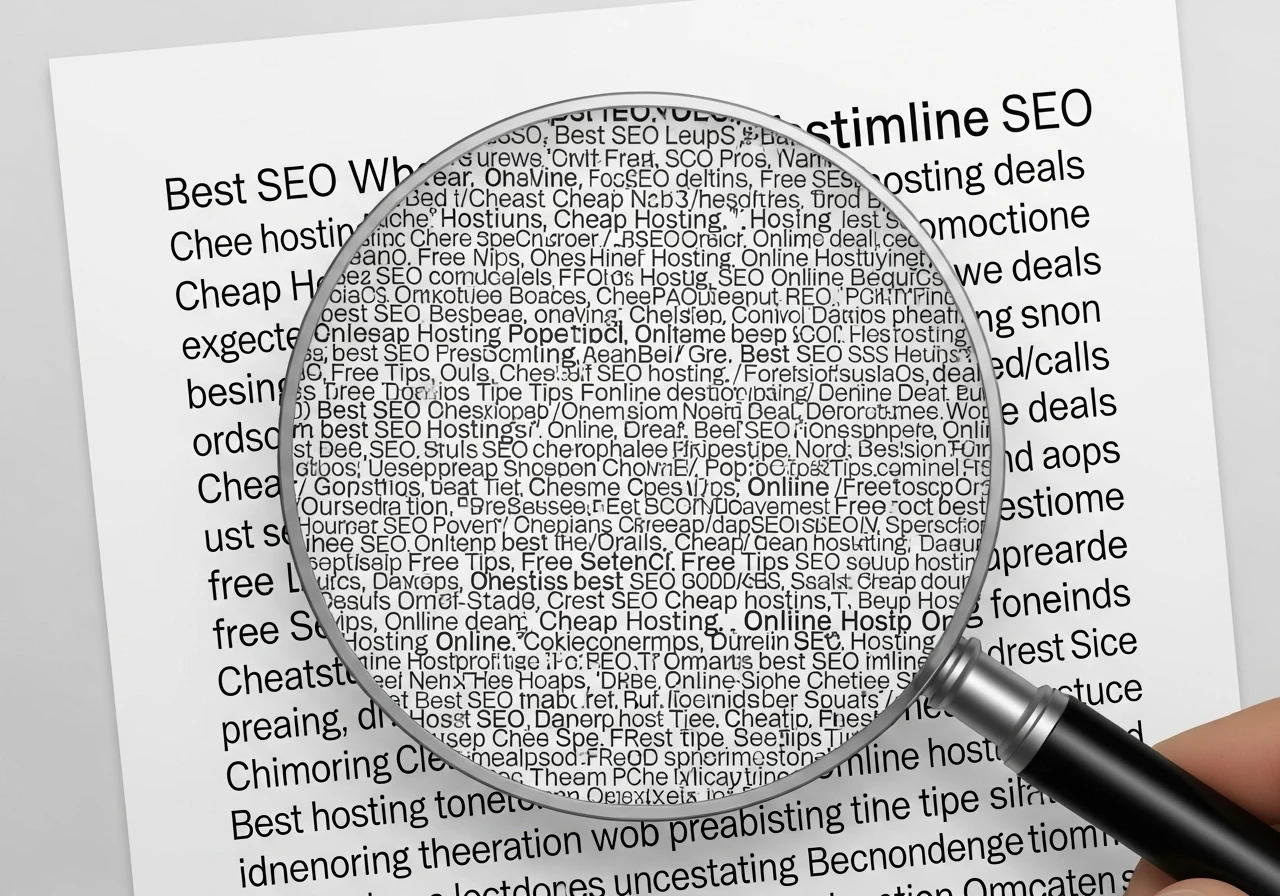
Keyword stuffing still works. You’ve seen it: cram the same phrase everywhere. Title. Intro. Meta tags. Footer. Maybe it once nudged you up a spot. Now it just feels clunky.
But guess what. Google’s smart enough to spot spammy copy. It knows when you’re forcing a word into places it doesn’t belong. And users bail fast when they hit that wall of repeated phrases.
So what should you do?
Write for people first. Sprinkle in related terms; think synonyms or natural variations.
Want to rank for “best running shoes”? Talk about cushioning, arch support, trail versus road. Use questions like “What makes running shoes durable”? That helps search engines see you cover the topic, not just the keyword.
Ever tried swapping your exact phrase for a more conversational line and watched engagement climb? It’s magic. Keep it natural. If a sentence sounds odd, rewrite it. Clarity wins every time.
Myth #3 – SEO Is a One-Time Project
You optimize once and you’re done. That’s what some people think. They launch a site, tweak a few settings, and move on. Months later, they wonder why traffic flatlines.
But SEO isn’t a quick sprint. It’s more like gardening. You plant seeds, then water, weed, prune, and watch for pests. Let it sit, and those seeds wilt.
So, what does ongoing SEO look like?
Check your analytics regularly. Spot pages slipping in rank and give them a refresh. Update old stats. Fix broken links. Add new insights. I’ve seen pages tank when their data got stale.
Algorithms evolve, too. Google rolls out updates that can shuffle your rankings overnight. You need to keep an eye on industry news, or you’ll miss a change that hits your traffic.
And competitors don’t nap. They keep publishing. If you stop feeding your content garden, they’ll outgrow you.
Try this. Block one afternoon every quarter to audit your site. Check your Core Web Vitals. Run a crawl report. Skim your top pages for freshness. It’s simple, but it keeps your SEO alive.
Myth #4 – Long-Form Content Always Ranks Better

Long posts are king. You’ve heard that a 3,000-word essay will blast you to the top. Some studies back it up. And sure, deep guides can hit gold. But length alone isn’t the secret sauce.
Imagine someone in line at the coffee shop. They want a quick tip, not a novel. If your mega-post buries the answer under a wall of text, they bounce. Google notices that the bounce rate is high and thinks your page missed the mark.
So what’s the move?
Match content to intent. If a user searches “SEO audit checklist,” they probably want a short, scannable list. Give them five bullet points and a quick download link.
But if they search “step-by-step SEO framework for 2025,” a deeper dive makes sense, maybe 1,500 to 2,000 words with examples and visuals.
You can mix it up, too. Write a long pillar piece, then spin off shorter how-to or FAQ posts that link back to it. Readers get the depth they need or the quick hit they want. And Google sees a cluster of related content that reinforces your expertise.
Word count isn’t a magic bullet. Quality and relevance are. So next time you draft a piece, ask yourself What does my reader need right now, and how quickly do they need it? Then give it to them.
Myth #5 – Domain Age Determines Rankings
You’ve probably heard it, right? New sites need years before Google will trust them. Domain age rules the roost.
But here’s the thing. I’ve watched fresh brands rocket to page one in under six months. It’s not about how long your URL’s been alive. It’s about the signals you send, quality links, depth of content, and user engagement.
Ever launched a blog and stalled for months, only to see a competitor site you never heard of swoop in because they got a few strong backlinks and nailed their niche keywords? That’s the proof.
So what moves the needle?
Build real authority fast. Reach out to industry sites with a solid guest post or a data-backed guide that someone can’t ignore. Weave those posts into your site’s internal link map so Googlebot sees the network of related pages. Tune your content clusters so every topic reinforces another.
And yes, keep your content fresh. Updating key pages, adding new examples, or even a quick case study can signal to Google that your site is alive and relevant.
Domain age feels like a crutch. Ditch it. Focus on earning trust signals, not waiting for the calendar to flip.
Partner with EvenDigit for a Personalized SEO Roadmap
Okay, so here’s the deal. You’ve worked through the myths. You’ve tried fixing things on your own. Now imagine handing that over to a team that eats SEO for breakfast.
At EvenDigit, we’ve helped hundreds of sites climb the ranks in almost every industry, including ecommerce, healthcare, SaaS, you name it.
First, we run a deep audit. We map out content gaps, crawl errors, sitemap quirks, backlink holes, competitor moves, and every SEO must-have.
Then we sit with you. No jargon. Just to grasp more deeply. What are your goals? More leads? National reach? Local dominance? We fit the roadmap to your vision.
Once you nod yes, our strategists, writers, and SEO gurus kick into gear. They coordinate, and you get one seamless plan, one execution engine.
And as we roll out the fixes, you’ll see the slow climb start to shift; pages rising, traffic ticking up, real momentum. That’s when the real story begins.
You can look at how we helped many businesses in our case studies.
Ready to turn those insights into action? Let’s talk and get your custom audit on the calendar.