
Search Engine Marketing (SEM) intelligence helps you make smarter, faster decisions using real data. By combining keyword research, analytics, competitor insights, and automation, marketers can increase conversions, reduce waste, and achieve stronger ROI. This guide explains how to use paid search intelligence, analytics, and integration with SEO to build a future-ready SEM strategy.
1. Understanding SEM Intelligence and Why It Matters
SEM intelligence is more than tracking clicks and costs. It’s the process of turning data into action. Every search query, click, and conversion holds valuable insights that can guide better targeting, smarter bidding, and more relevant ad messaging.
Modern SEM thrives on intelligence because platforms like Google Ads and Microsoft Advertising are now powered by AI-driven algorithms. The more data you analyze, the more precisely you can align your campaigns with real customer intent.
In 2026, marketers are moving away from reactive advertising to predictive SEM. This means using machine learning to anticipate what users will search next, and optimizing ad strategies before the competition does.
In short, SEM intelligence bridges creativity with data science. It ensures that every ad dollar is spent where it makes the most impact.
2. Building a Data-Driven SEM Strategy
Data is the backbone of a strong SEM strategy. When you understand how your audience searches, what motivates them, and where your competitors are spending, you gain control over your results.
Key Elements of a Data-Driven SEM Strategy
- Audience Understanding:
Use tools like Google Ads Insights, SEMrush, and SimilarWeb to map out user intent. Identify the keywords, pain points, and goals driving their search behavior. - Keyword Intelligence:
Look beyond volume. Focus on high-intent, long-tail keywords that match user needs. Track seasonal and trending keywords to adjust your campaigns in advance. - Competitor Benchmarking:
Analyze your competitors’ ad copies, landing pages, and bidding patterns. This helps you discover keyword gaps and messaging opportunities. - Bid and Budget Insights:
Review historical data to see which campaigns deliver the best ROI. Shift your spending toward high-performing ad groups and pause underperformers.
A/B Testing:
Continuously test variations in ad headlines, CTAs, and landing pages. Data from these tests becomes your decision-making fuel.
Quick View:
| Data Source | Insight Type | How It Helps |
| Google Ads Intelligence | Keyword & trend data | Adjust bids based on performance |
| Ahrefs / SEMrush | Competitor data | Identify content and ad gaps |
| GA4 | Behavior analytics | Optimize for intent and journey |
3. Optimizing Campaigns for Performance and ROI
Once the groundwork is laid, optimization determines success. The goal is to make your ads more relevant, your landing pages more persuasive, and your spending more efficient.
Ad Optimization Best Practices
- Incorporate primary and secondary keywords naturally in your ad text.
- Use emotional hooks like urgency, exclusivity, or social proof.
- Add clear CTAs such as “Get a Free Demo” or “Shop Now.”
- Regularly update ad variations to prevent fatigue.
Landing Page Optimization Tips
- Keep your message consistent with the ad copy.
- Reduce load times and improve mobile responsiveness.
- Use clear visuals, benefits-focused headlines, and trust badges.
- Place one clear CTA above the fold.
PPC Optimization Tips
- Implement automated bidding strategies like Target CPA or ROAS.
- Set bid adjustments for device type, location, and time of day.
- Use negative keywords to cut irrelevant traffic.
- Monitor impression share to maintain visibility among competitors.
Small adjustments here often create significant gains in ROI.
4. Using Marketing Analytics to Track and Refine Campaigns
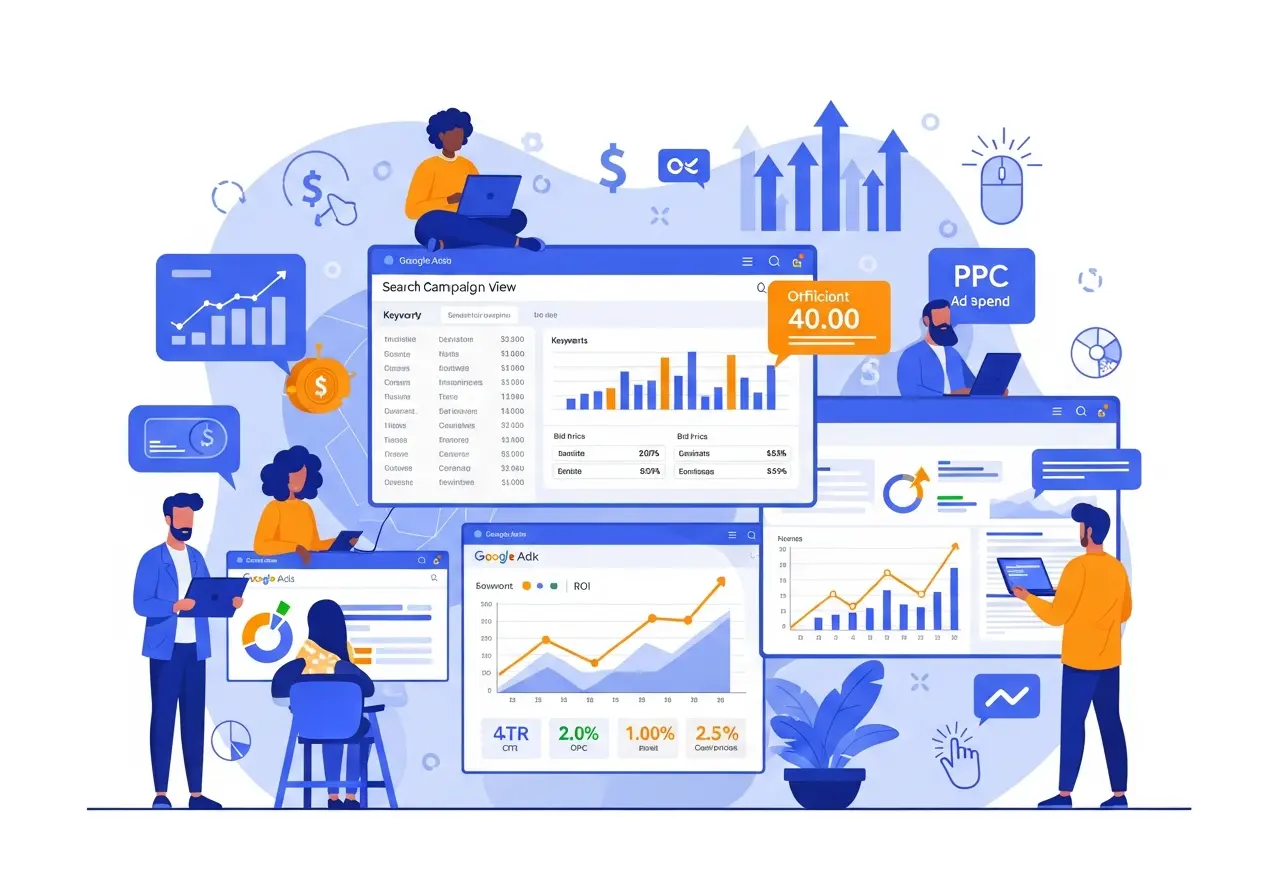
Analytics turns campaign data into direction. Without analysis, marketers only see numbers, not meaning.
Key Metrics to Monitor
- CTR (Click-Through Rate): Reflects ad relevance and audience engagement.
- CPC (Cost Per Click): Shows how efficiently you’re paying for traffic.
- Conversion Rate: Tells you how persuasive your landing pages are.
- Quality Score: A critical metric that affects both ranking and cost.
- ROAS (Return on Ad Spend): Measures how much revenue each dollar generates.
Continuous Improvement Process
- Audit your campaigns weekly.
- Identify underperforming keywords or ad sets.
- Refine bids and targeting based on audience insights.
- Use Google Analytics and Data Studio to visualize performance trends.
- Repeat the process monthly for consistent optimization.
Analytics helps you avoid guesswork. The more you study your campaign data, the easier it becomes to predict success patterns.
5. Integrating SEO and PPC for Maximum Impact
A high-performing SEM strategy doesn’t exist in isolation. SEO and PPC work better together than apart.
How to Align SEO and SEM
- Share keyword data between your SEO and PPC teams.
- Use PPC ads to test keyword viability before investing in organic content.
- Combine organic and paid results for the same keyword to dominate visibility.
- Retarget visitors who came through organic search using paid ads.
Benefits of Integration
- Higher overall click-through rates across SERPs.
- Improved brand trust through repeated exposure.
- More consistent messaging and creative testing opportunities.
- Balanced short-term and long-term traffic growth.
Together, SEO and SEM create a self-sustaining cycle of discovery and conversion.
6. Advanced SEM Intelligence: Predictive, AI, and Automation
AI has changed how marketers manage search. SEM intelligence today is powered by automation, predictive modeling, and behavioral insights.
Emerging Trends in Paid Search Intelligence
- Predictive Keyword Modeling: AI forecasts which keywords will convert based on past trends.
- Smart Bidding Automation: Google’s machine learning algorithms adjust bids in real time for maximum ROI.
- Creative Optimization Tools: Platforms like AdCreative.ai and Jasper create ad variants tested against audience responses.
- Audience Clustering: Advanced analytics tools segment users based on behavior and intent for better targeting.
Automation doesn’t replace strategy; it enhances it. Human creativity paired with AI precision is the new formula for performance.
7. Common Mistakes That Hurt SEM ROI
Even data-backed campaigns can fail if fundamentals are ignored. Avoid these pitfalls to keep your ROI strong.
- Using broad-match keywords without intent filters.
- Neglecting to add negative keywords.
- Ignoring mobile ad optimization.
- Linking ads to generic or irrelevant landing pages.
- Measuring success on clicks instead of conversions.
- Running the same ad creatives for months without testing.
Each mistake may seem small, but together they can drain thousands from your marketing budget.
8. The Future of SEM Intelligence Beyond 2026
Search is evolving rapidly. Generative AI and privacy-first marketing are shaping how SEM will operate in the coming years.
Key Future Shifts
- AI Overviews and Generative Search: Marketers will need to optimize for AI-curated summaries and contextual snippets.
- Voice and Visual Search: Ad formats will adapt to more conversational and image-based queries.
- Cookieless Targeting: First-party data will become the foundation for ad targeting and personalization.
- Cross-Platform Attribution: Unified dashboards will track performance across multiple ad networks.
SEM intelligence will move from being reactive to predictive, anticipating not just what users search, but why they search.
Final Thoughts: Turning SEM Intelligence into ROI
The secret to SEM success isn’t spending more. It’s spending smarter. When you combine analytics, creativity, and constant experimentation, SEM intelligence turns from a tool into a growth engine.
Invest time in data interpretation, refine your message, and test relentlessly. The brands that thrive will be those that connect data insights with human understanding.
Want to turn your paid search campaigns into high-performing ROI machines? Partner with EvenDigit to build a data-driven SEM strategy tailored for growth.
FAQs
- What is SEM intelligence, and why is it important?
It’s the process of using analytics and insights to improve SEM campaigns. It helps marketers identify trends, target the right audience, and increase ROI. - What tools can help with paid search intelligence?
Tools like SEMrush, Ahrefs, Google Ads Intelligence, and SpyFu provide deep insights into keywords, bids, and competitors. - How can SEO and PPC work together?
Sharing keyword insights and integrating strategies helps dominate both paid and organic results, increasing visibility and conversions. - What metrics should I track for SEM ROI?
Track CTR, CPC, Quality Score, Conversion Rate, and ROAS to measure performance effectively. - How does AI impact SEM optimization?
AI helps automate bidding, predict keyword performance, and optimize ad creatives, saving time and improving campaign precision.