Summary
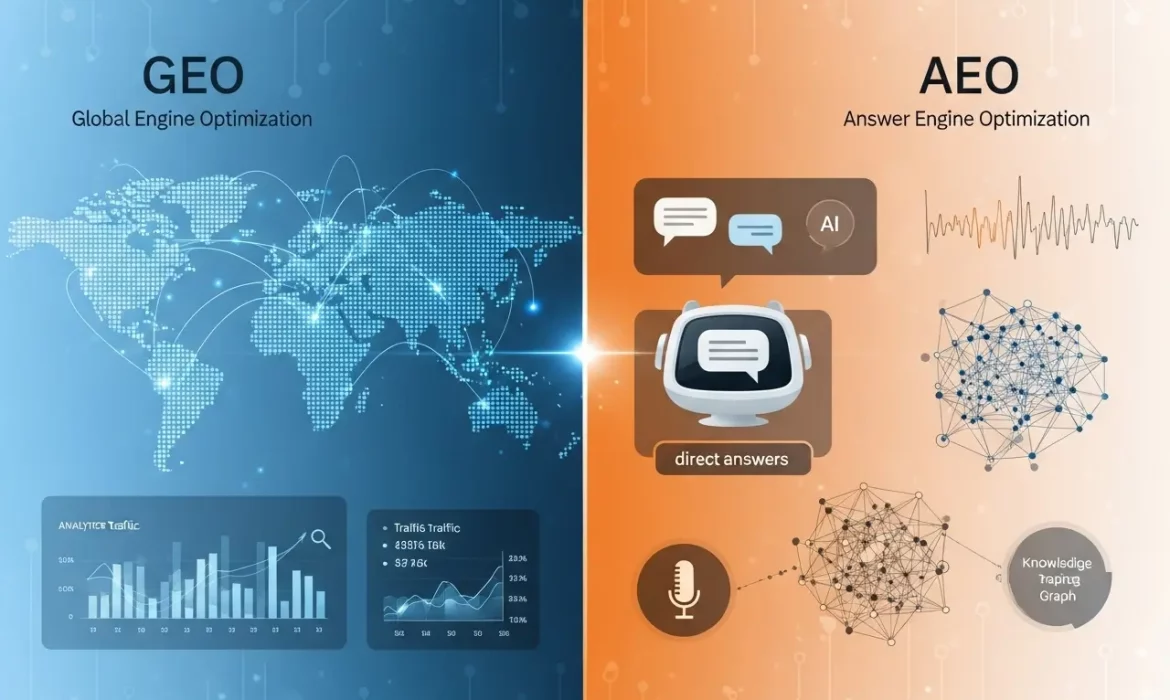
Generative Engine Optimization (GEO) and Answer Engine Optimization (AEO) are the next big evolutions of SEO. AEO helps you win direct answers in featured snippets and voice searches, while GEO earns your brand citations inside AI-generated summaries. Together, they form the foundation of AI-driven search optimization in 2025. The goal isn’t just traffic anymore; it’s visibility inside conversations.
Understanding the Shift from SEO to AI-Driven Search Optimization
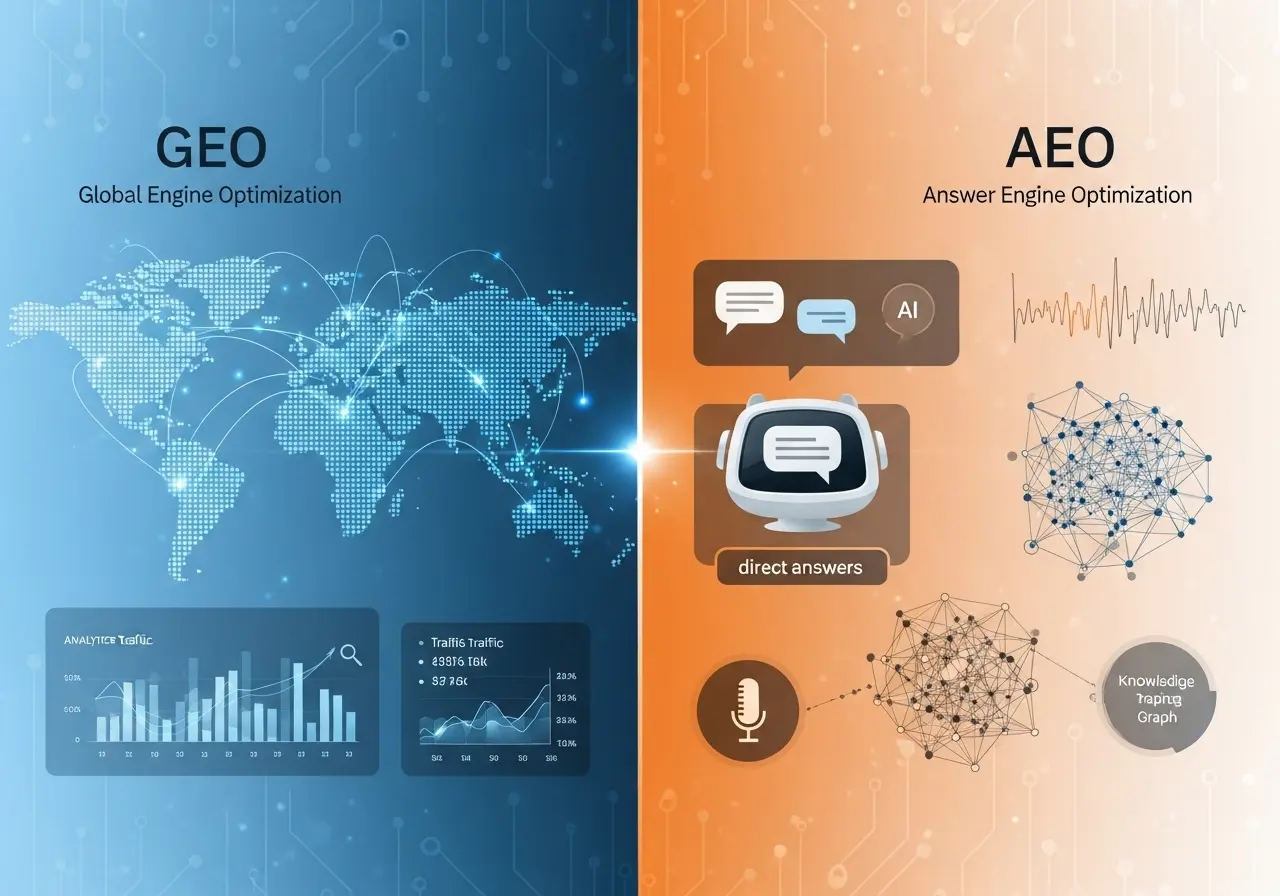
Search is no longer just about ranking. It’s about relevance in AI-driven conversations. Google’s Search Generative Experience (SGE), ChatGPT, and Perplexity are changing how people discover information. Instead of clicking multiple links, users get summarized, trusted answers instantly.
To win in this landscape, marketers need to optimize for both Answer Engines that give instant responses and Generative Engines that compile insights across trusted sources.
What Is Generative Engine Optimization (GEO)?
Generative Engine Optimization (GEO) is about making your content recognizable, reliable, and quotable by generative AI systems. It ensures your brand becomes the source behind the AI’s synthesized answers.
Why It Matters
- AI overviews use web content to form composite answers.
- Being cited in those summaries drives visibility, authority, and trust, even if users don’t click through.
- GEO positions your brand as part of the AI’s knowledge base, not just Google’s index.
Key GEO Factors
- Comprehensive, well-structured content with clear subtopics
- Use of entities (people, brands, concepts) that AI can identify
- Clear data points, sources, and fact statements
- Schema markup for structure and readability
- A tone that mirrors natural conversation
What Is AEO SEO (Answer Engine Optimization)?
AEO SEO focuses on securing the direct answer spot. It’s the optimization behind Google’s featured snippets, voice search responses, and “People Also Ask” results.
Why It Matters
- 60% of voice search answers come from featured snippets.
- AEO boosts visibility where users never scroll (the top of the results page).
- It’s how your content “speaks back” when users ask Alexa or Google Assistant a question.
Core AEO Techniques
- Question-based H2s and H3s (“What is…”, “How does…”)
- Concise, answer-first content (40–60 words)
- Structured data: FAQPage, HowTo, and Article schema
- Simple, human language that sounds like a spoken response
GEO vs AEO: Key Differences
| Feature | AEO SEO | Generative Engine Optimization (GEO) |
|---|---|---|
| Goal | Appear as a direct answer in SERP or voice search | Get cited inside AI-generated summaries |
| Primary Target | Featured snippets, PAA, voice assistants | Google’s AI Overview, ChatGPT, Perplexity |
| Content Style | Short, precise, answer-first | Long-form, structured, context-rich |
| Focus | Question-answer optimization | Topic authority and semantic relevance |
| Schema | FAQPage, HowTo | Article, Organization, Breadcrumb |
| Metric of Success | Featured snippet ownership | Citation share in AI outputs |
Both are vital AEO for instant visibility, GEO for long-term authority.
Building an AI-Driven Search Optimization Strategy

To future-proof your SEO, blend traditional SEO, AEO, and GEO into one cohesive system.
1. Map Topics to Intent and Entities
Identify what users ask and how AI understands it. Tools like AnswerThePublic, Google PAA, and AlsoAsked reveal question patterns.
Create clusters that link entities (like “content marketing” + “AI tools” + “strategy”) so AI models recognize your authority.
2. Structure Content for Answers and Citations
- Start each section with a short, clear answer.
- Follow with supporting details, tables, or examples.
- Use bold subheadings, numbered steps, and data for better parsing by AI.
3. Optimize for Conversational Language
Write like your users speak. Use natural phrasing such as “How can I optimize for voice search?” rather than stiff, keyword-stuffed queries.
4. Add Schema Markup for Both AEO and GEO
- AEO: FAQPage, HowTo, Product
- GEO: Article, Organization, Breadcrumb, Author
This helps AI engines extract, validate, and credit your content.
5. Build E-E-A-T at Scale
Expertise, Experience, Authoritativeness, and Trustworthiness matter more than ever. Add real author bios, cite reputable sources, and show firsthand experience.
Content Formats That Win in GEO
AI models prefer structured, data-driven clarity.
Use these GEO-friendly formats:
- Comparison Tables for easy reference
- Mini Case Studies to prove authority
- Bullet and Number Lists for logical flow
- FAQ Sections to cover conversational queries
- Citations with Source Names to signal credibility
Content Formats That Win in AEO
AEO relies on sharp, clear answers.
Here’s how to format for snippet success:
- Start with a one-sentence definition before diving deep.
- Use step-by-step how-tos for “process” queries.
- Add FAQ sections matching “People Also Ask.”
- Keep tone conversational, not robotic.
Technical SEO Foundation for GEO and AEO
Even the best content won’t rank if your site isn’t technically sound.
Focus on:
- Fast page speed and Core Web Vitals
- Mobile responsiveness
- HTTPS security
- Proper internal linking and crawl depth
- Accessible, semantic HTML structure
Measuring Success: GEO vs AEO Metrics
To evaluate progress, track both visibility and citations.
GEO Metrics
- AI Overview mentions
- Brand citations in ChatGPT or Perplexity
- Share of voice in AI summaries
AEO Metrics
- Featured snippet win rate
- “People Also Ask” visibility
- Voice search responses detected via analytics
Shared Metrics
- Organic traffic
- Engagement rate
- Conversion lift from top-funnel exposure
Future of AI-Driven Search Optimization
In 2025 and beyond, AI doesn’t replace SEO; it reshapes it. Expect hybrid search environments where AEO drives instant responses and GEO builds lasting credibility across AI interfaces.
Your strategy should evolve from ranking keywords to earning trust signals inside generative systems.
Partner with EvenDigit to Win the AI-Search Game
At EvenDigit, we help brands move beyond traditional SEO. Our team builds AI-driven search strategies combining GEO, AEO, and SEO so your content ranks high, gets quoted by AI, and delivers measurable growth.
Frequently Asked Questions
What Is Generative Engine Optimization (GEO)?
GEO is the approach of optimizing content so AI systems like Google’s SGE or ChatGPT can understand, reference, and cite it within their summaries.
What Is AEO SEO?
AEO SEO is optimizing content to appear in featured snippets and direct voice answers by providing concise, structured responses.
How Are GEO and AEO Different?
AEO targets short, answer-based visibility, while GEO builds broader authority in AI-generated overviews and summaries.
Can GEO Replace SEO?
No. GEO complements traditional SEO. You still need backlinks, site health, and keyword strategy to help AI engines trust and find your content.
How Do I Track GEO Citations?
Use manual screenshot logs, AI overview trackers, or emerging analytics tools like BrightEdge Copilot to measure citation share.