
Concise Summary
To grow your ecommerce store in 2026, you need more than Google. Combine multiple search engines like Google, Amazon, Pinterest, and even your own internal site search to attract, engage, and convert shoppers. The strongest brands use external search engines to bring traffic and internal search tools to turn that traffic into sales.
Why Search Engines Matter for Ecommerce Success?
Every online purchase begins with a search. Whether someone types a product name on Google or looks it up inside Amazon, that search is the first step in their buying journey.
Search engines are where discovery happens. They help users compare prices, check reviews, and explore alternatives before making a decision. For ecommerce businesses, visibility on these platforms directly translates into revenue.
There are two main categories: external search engines like Google and Amazon, which drive new traffic to your store, and internal search engines, the one inside your website, which helps convert that traffic into customers. Balancing both is what defines modern ecommerce success.
External Search Engines that Drive Online Store Traffic
External search engines are your brand’s discovery tools. They help new users find your store and products organically or through paid placements.
1. Google Search and Shopping
Google still dominates the ecommerce SEO landscape. Around 90% of online experiences start here, which means ranking on Google directly influences your store’s visibility.
How to optimize for Google:
- Write keyword-rich titles and product descriptions.
- Add structured data (schema) to highlight reviews, prices, and availability.
- Publish blogs and buying guides targeting long-tail keywords.
- Set up Google Shopping feeds to show your products visually in search results.
Google Shopping ads perform especially well for high-intent searches. They appear at the top of the results with images, prices, and ratings, capturing buyers ready to act.
2. Bing and Microsoft Shopping Ads
While smaller than Google, Bing users often spend more per session. The platform’s lower competition also means a lower cost-per-click (CPC) for ads.
Optimize your Bing listings the same way you do for Google, and link your Microsoft Merchant Center for product-based ads. For brands on a budget, Bing can be a hidden advantage.
3. Amazon: The Ecommerce Search Engine Giant
Amazon is more than a marketplace; it’s a search engine built around buying intent. Over 60% of shoppers start product searches here.
To rank high on Amazon:
- Optimize your titles and bullet points with relevant keywords.
- Use high-quality images and videos.
- Get reviews and maintain a strong rating.
- Track performance using Amazon’s A9 ranking data.
Sponsored Product Ads can boost visibility instantly, while organic optimization strengthens long-term placement.
4. eBay, Walmart, and Niche Marketplaces
Marketplaces like eBay and Walmart are valuable for specific audiences. eBay favors clear titles, accurate item specifics, and detailed descriptions, while Walmart Marketplace offers a strong entry for mid-size brands expanding reach in the U.S.
Listing on multiple marketplaces increases visibility across different shopping searches.
5. Pinterest and Visual Search Engines
Pinterest isn’t just social media; it’s a visual search engine that thrives on discovery. Its audience uses it to plan purchases, not just browse.
Tips for Pinterest optimization:
- Use keyword-rich pin titles and descriptions.
- Post lifestyle imagery that matches real use cases.
- Enable Pinterest Shopping and rich pins for direct purchases.
If you sell fashion, beauty, or home decor products, Pinterest is essential for visual-driven sales.
6. YouTube as a Hybrid Search Channel
YouTube is the second-largest search engine globally. Video reviews, tutorials, and product demos influence purchase decisions at scale.
YouTube for ecommerce:
- Create short, keyword-focused product videos.
- Use clear titles and clickable thumbnails.
- Link product pages in descriptions and cards.
- Combine with YouTube Shopping ads to drive direct traffic.
Internal Search Engines and Ecommerce Search Optimization
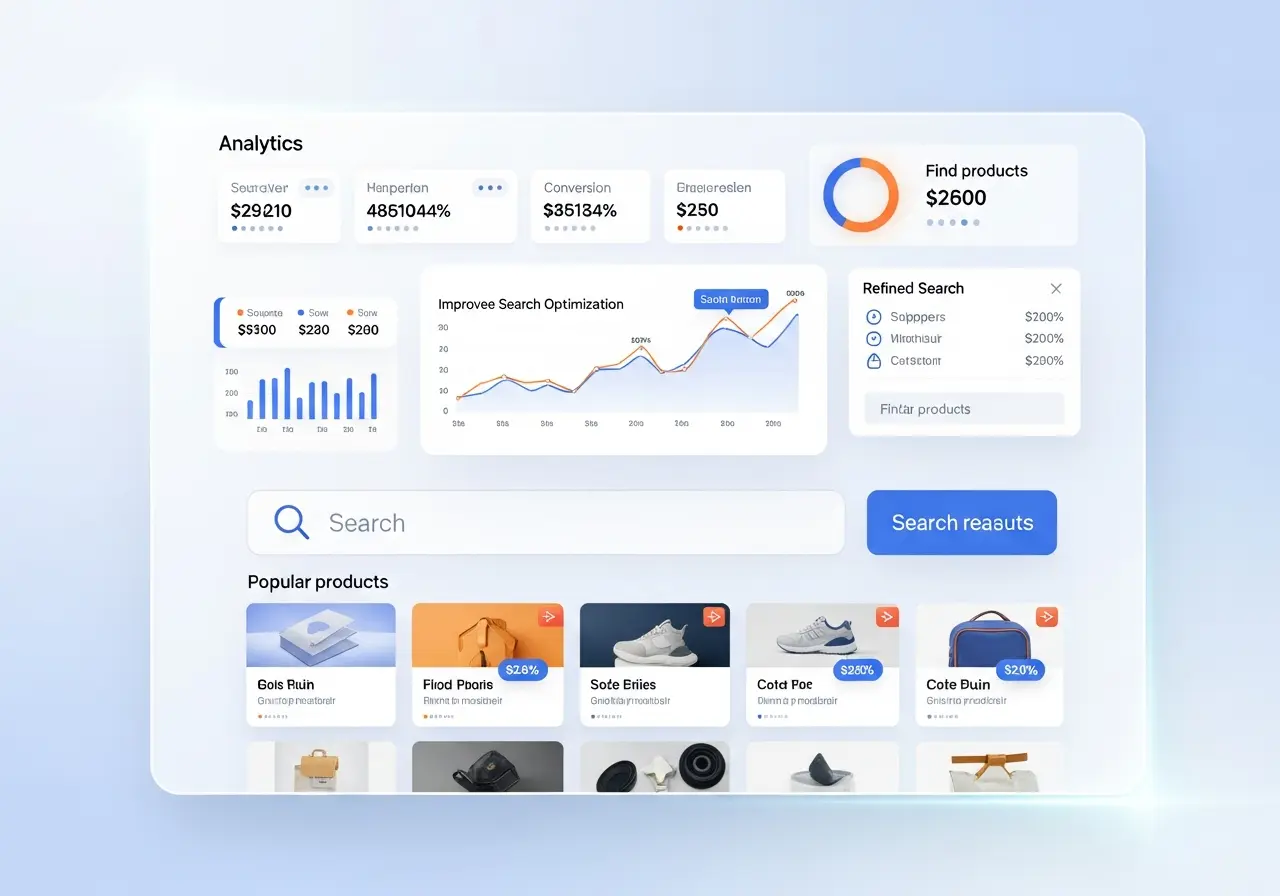
Getting visitors to your site is only half the battle. Once they arrive, internal search helps them find what they need and boosts your conversion rate.
Why Internal Search Impacts Conversions
Visitors who use your site’s search bar are 2–3 times more likely to convert. A well-optimized internal search ensures users find exactly what they’re looking for, even with spelling errors or vague queries.
If your search results are slow or irrelevant, potential buyers leave fast. That’s why investing in intelligent internal search tools is a direct investment in sales.
Top Internal Search Engine Options for Ecommerce
| Tool | Ideal For | Key Strengths |
|---|---|---|
| Algolia | Large catalogs | Lightning-fast results, strong filters, typo tolerance |
| Klevu | Mid-market brands | Natural language understanding, recommendations |
| Searchspring | Visual merchandising | Blend of AI automation and manual control |
| Bloomreach | Enterprise brands | Content + product search with personalization |
| Wizzy | D2C and SMB stores | Plug-and-play AI search, semantic understanding |
Each of these platforms helps your site understand user intent and show results that match context, not just keywords.
Best Practices for Ecommerce Search Optimization
- Offer autocomplete and visual previews.
- Highlight trending or related products.
- Track internal search queries to learn what people really want.
- Use AI-based re-ranking to prioritize top-selling or in-stock items.
The goal is to make search results feel personalized, not generic.
Combining External and Internal Search for Maximum Sales
External search brings traffic. Internal search converts it. The synergy between the two defines ecommerce profitability.
Example: A user finds your product through a Google Shopping ad. They land on your website, browse for similar items through internal search, and check out faster because results match their intent.
That’s a complete funnel from discovery to conversion, all powered by search.
Steps to Combine Both Effectively
- Use analytics to identify which external sources drive high-intent visitors.
- Optimize internal search to recommend products related to those queries.
- Build retargeting campaigns for users who searched but didn’t buy.
- Monitor search trends across both channels to refine product listings.
Emerging Trends in Ecommerce Search Optimization
The search landscape is evolving quickly. Staying ahead means adapting early.
AI Search Assistants and Predictive Search
AI-powered assistants now help users shop through chat-based recommendations. These assistants learn preferences and deliver more precise results each time.
Integrating conversational search within ecommerce sites is becoming a game-changer.
Visual and Image-Based Search
Shoppers can now upload photos to find similar products using tools like Google Lens or Pinterest Lens. To rank in these searches, use clear images, consistent backgrounds, and descriptive alt text.
Voice Search in Ecommerce
People increasingly ask devices for product recommendations verbally. Create content around natural language phrases like “best wireless headphones under $100” to align with voice search intent.
Measuring ROI from Search Engine Strategies
Success isn’t about traffic alone. It’s about how that traffic converts.
Track these key metrics:
| Metric | What It Measures | Why It Matters |
|---|---|---|
| CTR (Click-Through Rate) | How engaging your listing is | Higher CTR = better visibility |
| Conversion Rate | Visitors turning into buyers | Tracks actual sales impact |
| Bounce Rate | Visitors leaving fast | Reflects content or UX quality |
| AOV (Average Order Value) | Upsell success | Measures order profitability |
| Internal Search Usage | Search engagement on-site | Indicates usability strength |
Use GA4 for end-to-end tracking, Search Console for keyword performance, and your internal search tool’s dashboard to understand on-site behavior.
Choosing the Right Search Engine Mix for Your Store
Not every store needs every engine. Pick what matches your goals and audience.
For startups: Focus on Google Shopping, Pinterest, and internal search tools that improve conversions.
For established retailers: Diversify with Amazon, Bing, and marketplaces to expand reach.
For niche or luxury brands: Leverage content SEO, visual search, and personalized site experiences.
EvenDigit Assists Ecommerce Brands Grow
At EvenDigit, we help ecommerce brands build a 360-degree search strategy. Our team combines ecommerce SEO, paid search, and internal AI-driven optimization to turn clicks into conversions.
We set up data tracking, optimize your listings, and ensure your website search converts visitors into loyal customers.
Ready to grow your traffic and sales? Let’s design your ecommerce search strategy today.
FAQs
Which search engine drives the most ecommerce traffic?
Google leads overall, but Amazon captures the highest purchase intent traffic.
What is the best internal search tool for online stores?
Algolia and Klevu are excellent options for AI-powered on-site search.
How can ecommerce SEO improve sales?
It brings high-intent visitors who are actively looking for your products, increasing conversions naturally.
Should I advertise on both Google and Bing?
Yes. Bing offers cheaper clicks and access to a different audience segment.
What’s the next big trend in ecommerce search?
AI-assisted, visual, and voice search will redefine how customers find and buy products.