Concise Summary
Conversational SEO in 2025 is about optimizing for how people talk, not just how they type. AI-driven search and Google’s SGE demand content that directly answers user intent, uses natural language, and builds trust through expertise, authority, and transparency. This guide breaks down the key frameworks, tools, and steps you need to master it.
Introduction
Search is evolving fast. Google’s Search Generative Experience (SGE) and AI assistants like ChatGPT or Gemini now deliver answers in real-time, not just links.
To stay visible, your content must speak like your audience. That’s where Conversational SEO comes in.
It’s not about ranking for keywords anymore; it’s about becoming the most relevant, credible voice in the conversation. In this blog, you’ll learn how to structure, write, and optimize content that connects naturally with users and search engines in 2025.
What Is Conversational SEO And Why Does It Matter in 2025?

Conversational SEO is the art of optimizing content for how real people speak and ask questions, especially across voice search, AI overviews, and chat-based search experiences.
Instead of keyword stuffing, it focuses on understanding intent, answering questions clearly, and sounding human.
In 2025, it matters because:
- Google’s AI Overviews often cite answers written in a conversational tone and structure.
- Voice assistants rely on natural question-based content.
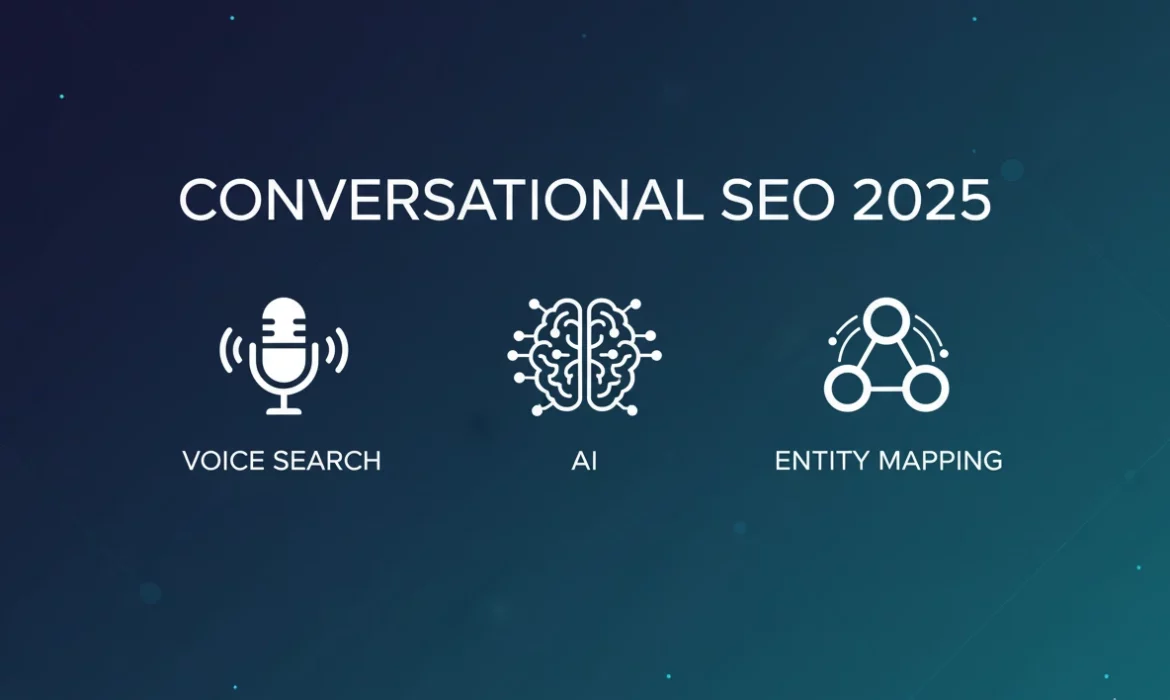
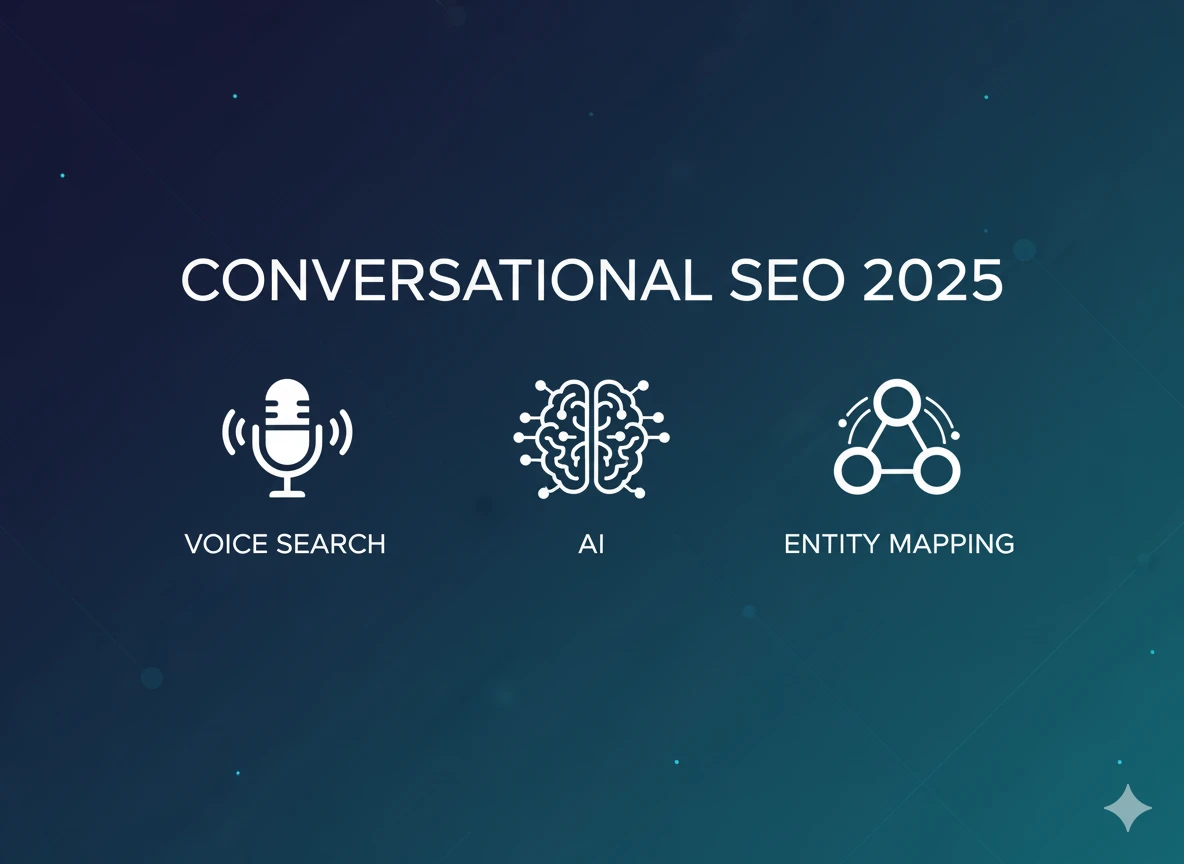
- Entities and context now drive how search engines understand your pages.
When done right, conversational SEO makes your brand both discoverable and credible in the AI era.
The New Rules Of Conversational SEO
AI search changed the old playbook. These are the non-negotiables every content creator and SEO team must master.
1. Answer Engine Optimization (AEO) Is The New SEO
Your goal isn’t just to rank; it’s to be referenced in AI Overviews.
That means structuring content to:
- Provide clear, single-sentence answers within the first 100 words.
- Add context, stats, and examples immediately after.
- Use schema markup for FAQs, How-Tos, and key takeaways.
2. Write For Conversations, Not Crawlers
- Use natural phrases like “how do I,” “why does,” or “best way to.”
- AI models prefer content that mimics spoken language, not robotic keyword strings.
- Quick test: Read your content aloud. If it feels like dialogue, you’re on track.
3. Build Authority Through E-E-A-T
In a noisy search landscape, trust is the ranking factor.
Show your Experience, Expertise, Authoritativeness, and Trustworthiness by:
- Adding expert author bios.
- Linking to verified studies and credible sites.
- Including first-hand insights, not just summaries.
4. Think In Entities, Not Keywords
- Entities are defined as “things”: people, products, concepts.
- Optimizing for them helps Google connect your content semantically.
- Example: Instead of just using “voice search,” tie it to related entities like “smart speakers,” “mobile queries,” and “AI assistants.”
How To Optimize For Natural And Voice Search?
Voice and AI queries sound like real questions. Your strategy should match that tone.
- Target long-tail conversational queries such as “how to boost site traffic using AI” instead of “AI traffic boost.”
- Create FAQ sections that directly answer questions word-for-word.
- Use structured data markup so search engines understand your answers.
- Optimize for local intent. Voice searches often end with “near me” or specific locations.
- Test content on voice assistants like Siri, Alexa, or Google Assistant to ensure readability.
Build Content That AI Wants To Cite
AI systems extract text that’s clear, factual, and self-contained.
That means:
- Use short paragraphs (2-3 lines).
- Add bullet lists, comparison tables, and definitions.
- Include stat-based credibility lines (e.g., “According to Google’s SGE report, 65% of users prefer AI-generated summaries”).
- Update old posts regularly. AI tools value freshness.
In short: Write to be summarized.
Master Entity-Based SEO And Topic Clusters
Entity SEO builds topical authority that AI can recognize and cite.
Here’s how:
- Identify core entities related to your niche (e.g., “Conversational SEO,” “Voice Search Optimization,” “Schema Markup”).
- Create topic clusters; one pillar article with internal links to sub-topics.
- Use consistent internal linking and anchor text that match your entity names.
This helps both human readers and AI understand your expertise area holistically.
Implement Schema Markup To Strengthen Context
Structured data gives AI a shortcut to understand your page.
Use schema types like:
- FAQPage for question-answer sections.
- HowTo for step-based guides.
- Article and BreadcrumbList for better crawl hierarchy.
- LocalBusiness for local queries.
This makes your content eligible for snippets, carousels, and AI citations.
9 Best Practices For Mastering Conversational SEO In 2025
Conversational SEO is a long game. The following best practices help you build sustainable visibility that adapts to every AI update.
1. Start With An AI-Focused SEO Audit
Identify where your site stands in voice readiness, schema, and content structure. Use tools like Search Console and Screaming Frog.
2. Research Intent, Not Just Keywords
Use tools like AnswerThePublic, AlsoAsked, and ChatGPT prompts to uncover how people phrase their questions.
3. Map Entities And Topics
Create a content map showing entity relationships and supporting topics. This boosts contextual strength.
4. Build Question-Based Content
Each major content piece should answer at least one People Also Ask query directly in a headline or subhead.
5. Write Naturally And Use Structured Formatting
Avoid keyword stuffing. Instead, use conversational phrasing with short, scannable paragraphs and lists.
6. Implement Schema Markup Consistently
Add FAQ, HowTo, and Article schema for AI visibility and rich snippets.
7. Optimize UX And Core Web Vitals
Fast load speed, mobile friendliness, and clear navigation are essential for voice search success.
8. Update And Refresh Content Frequently
AI tools reward freshness. Review high-performing content quarterly and refresh data and examples.
9. Monitor AI Overviews And Adapt
Track which pages are cited in AI results using tools like RankRanger and SGE Tracker. Adjust based on patterns.
Measure Success In Conversational SEO
To ensure your efforts are paying off:
- Track voice search impressions and clicks in Google Search Console.
- Analyze featured snippet and People Also Ask placements.
- Monitor AI Overview mentions using brand + keyword searches.
- Watch engagement metrics such as time on page, scroll depth, and CTR.
- These reveal how AI and users are perceiving your conversational quality.
Turn Search Conversations Into Conversions With EvenDigit
Conversational SEO isn’t just about rankings, it’s about relationships. At EvenDigit, we combine AI-powered content intelligence, semantic SEO, and E-E-A-T-driven strategy to make sure your brand becomes the answer users and AI algorithms trust.
Whether you need entity mapping, AI-optimized content architecture, or full voice search readiness, our experts can help you turn every query into an opportunity.
Let’s build content that speaks human, performs technically, and ranks algorithmically. Connect with EvenDigit today, and let’s make your brand the voice users listen to.
Some Related Questions People Also Ask
What Is Conversational SEO?
Conversational SEO is optimizing content to match how people naturally ask questions in voice and AI-driven search. It focuses on intent, clear answers, entities, and structured formats like FAQs and tables so search engines and AI systems can understand and cite your content.
How Is Conversational SEO Different From Traditional SEO?
Traditional SEO centers on short keywords and exact matches. Conversational SEO targets full questions, multi-intent queries, and entity relationships. It prioritizes direct answers, natural phrasing, and structured data that support snippets and AI Overviews.
How Do I Find Conversational Keywords And Questions?
Start with People Also Ask results, autocomplete suggestions, and tools like AnswerThePublic and AlsoAsked. Add customer support transcripts, sales call notes, and forum threads to capture real phrasing. Group questions by intent, such as what, how, why, and which.
What Content Formats Perform Best For Conversational SEO?
Clear definitions, step lists, comparison tables, short verdicts, and FAQs perform well. Place a concise answer near the top, then add context, examples, and sources. Keep paragraphs short and use headings that echo how users ask the question.
How Do I Optimize For Voice Search?
Write in natural language, answer one question per section, and keep answers scannable and accurate. Use FAQPage and HowTo schema when appropriate, improve mobile speed, and include local details when relevant, such as hours, service areas, and directions.
What Is Entity-Based SEO And Why Does It Matter?
Entity SEO organizes topics around defined concepts like products, brands, and processes. Mapping entities and linking related pages helps search engines understand context. This boosts topical authority and improves your chance of being cited in AI results.
Which Schema Types Should I Use For Conversational SEO?
Use Article and BreadcrumbList on long-form content. Add FAQPage for Q and A sections, HowTo for step-by-step guides, and LocalBusiness for local intent. Ensure the visible text matches the structured data fields you publish.
How Do I Know If My Content Is Showing In AI Overviews?
Track queries where you rank and manually check for citations. Monitor patterns across definitions, tables, and FAQs that appear. Update sections that win citations with clearer wording, fresh data, and a stable source URL.
How Often Should I Refresh Conversational Content?
Review key pages every quarter. Refresh statistics, examples, screenshots, and internal links. Add new PAA questions that emerged and prune sections that no longer match user intent.
What Metrics Prove Conversational SEO Is Working?
Watch featured snippets, People Also Ask placements, and rich result impressions. Track engagement, such as time on page and next page rate. Tie wins to assisted conversions and new user growth from organic search.