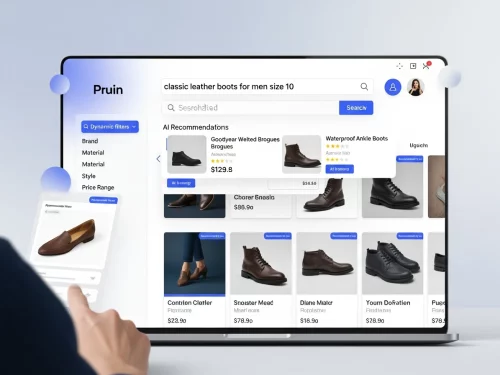

Summary
Visual search is changing how people discover information. Instead of typing keywords, users are uploading images to search engines. This shift means brands must now focus on optimizing their visuals, not just their words. Strong visual search integration, descriptive metadata, structured data, and AI visual search strategies are now core to ranking and converting in 2026.
What Is Visual Search Integration?

The search landscape is no longer text-only. People point their cameras at a product, a flower, or even a recipe, and instantly get results. That’s visual search.
Visual search integration means making your brand’s images searchable and understandable by search engines. It’s about optimizing how your visuals are indexed, interpreted, and ranked so they appear when users search by image instead of keywords.
Think of Google Lens, Pinterest Lens, or Amazon StyleSnap. Each lets users upload or scan an image to find similar items or information. This shift is massive for SEO because visuals now drive discovery as much as content.
When your visuals are optimized, your products show up in “search what you see” results. That’s how you win attention in a crowded market.
How AI Visual Search Works Behind the Scenes?
To optimize effectively, you need to understand how AI sees. Visual search is powered by computer vision, a branch of artificial intelligence that lets machines “see” and recognize patterns. Here’s how it works:
- The system scans an uploaded image.
- It identifies objects, textures, colors, and patterns.
- Then it cross-references this data with indexed images and web pages.
- Finally, it displays visually similar results or exact product matches.
This process uses convolutional neural networks (CNNs), the same technology that’s behind facial recognition and self-driving cars. Search engines also factor in context, such as alt text, surrounding content, schema markup, and engagement data.
So, when your image is high-quality, unique, and contextually supported by relevant text, it ranks higher in visual and image search SEO.
Why Visual Search Is Transforming SEO Strategy?
Visual search optimization isn’t just another SEO trend. It’s a shift in user behavior. Here’s why it’s a game-changer:
- Faster discovery: Users find what they want in seconds by scanning instead of typing.
- Smarter relevance: AI understands visual context, not just keywords.
- Higher conversions: Shoppers who use visual search are more likely to buy.
- Visual-first generation: Gen Z and millennials rely heavily on images, not text.
For e-commerce, travel, and lifestyle brands, this is huge. Imagine someone photographing a lamp in a café. With optimized visuals, your brand’s version of that lamp appears instantly in their search feed. That’s real-time demand capture through visual search integration.
5 Visual Search Optimization Strategies That Drive Results
Getting visual search right takes more than uploading pretty photos. Here’s how to master it.
-
Optimize Image Metadata the Right Way
- Rename files descriptively: red-leather-handbag-vintage.jpg instead of IMG_4728.jpg.
- Write natural, keyword-aligned alt text that describes both object and intent.
- Add relevant captions and supporting text around the image for context.
- Example:
- Bad alt text: “handbag”
- Good alt text: “red vintage leather handbag with gold buckle for women”
-
Use Structured Data for Smarter Indexing
Structured data helps search engines understand what an image represents.
Add schema types like ImageObject, Product, or CreativeWork to provide context such as brand, price, and availability. This makes your visuals eligible for rich snippets and product carousels.
-
Improve Image Quality and Uniqueness
AI tools now recognize originality. Avoid overused stock photos. Use authentic visuals that show your product clearly, from multiple angles, in natural light. User-generated photos and influencer visuals also strengthen authenticity and ranking.
-
Create a Visual Sitemap
Visual sitemaps help search engines find and index your images faster. Add all key visuals, include alt text, and submit through Google Search Console.
-
Compress and Optimize for Speed
Slow images kill rankings. Compress without losing clarity. Use WebP or AVIF formats. Tools like TinyPNG or Squoosh maintain quality while reducing file size. Fast-loading visuals keep both users and Google happy.
How Visual Search Integration Fits Into the Marketing Funnel?
Visual search plays a role in every funnel stage.
| Funnel Stage | How It Works | Example |
|---|---|---|
| Discovery | Users snap or upload an image to find products | User scans a chair → finds a similar product |
| Desire | Visual storytelling drives emotion | 360° product views or lifestyle shots |
| Evaluation | Comparison made easier | “Find similar” carousels or AR previews |
| Intent | Image-based product ads | Google Shopping visual ad |
| Conversion | Visual checkout journeys | Buy directly from image result |
| Loyalty | Personalized recommendations | “Similar looks you might like” |
| Advocacy | UGC and reviews enhance visibility | Customer photos get indexed |
When visuals are optimized, your funnel tightens. Every step from discovery to conversion becomes faster and frictionless.
Tracking and Measuring Visual Search Performance
You can’t improve what you don’t measure. Here’s how to track success:
- Google Search Console: Check image impressions, clicks, and CTR under “Image” filters.
- Analytics tools: Track engagement rates and conversion from visual sources.
- AI insights: Use visual analytics to see which images perform best.
- Key metrics:
- Image impressions growth (%)
- CTR from image results
- Conversion rate from visual-assisted traffic
- Engagement time on image-rich pages
By monitoring these, you can refine your visual SEO strategy month after month.
Industry-Specific Use Cases of Visual Search Integration
Every industry benefits differently.
- E-commerce: Instant product discovery, shoppable visuals, and AI-driven recommendations.
- Travel & Hospitality: Users snap landmarks to discover destinations, hotels, and experiences.
- Fashion & Lifestyle: Visual match tools like “Shop the Look” inspire direct purchases.
- Home Decor & Real Estate: Visual inspiration turns into buying intent.
- Food & Recipes: Snap-to-search lets users find similar dishes and recipes instantly.
Brands using image search SEO intelligently can double engagement from organic traffic sources.
The Future of AI Visual Search and SEO Evolution
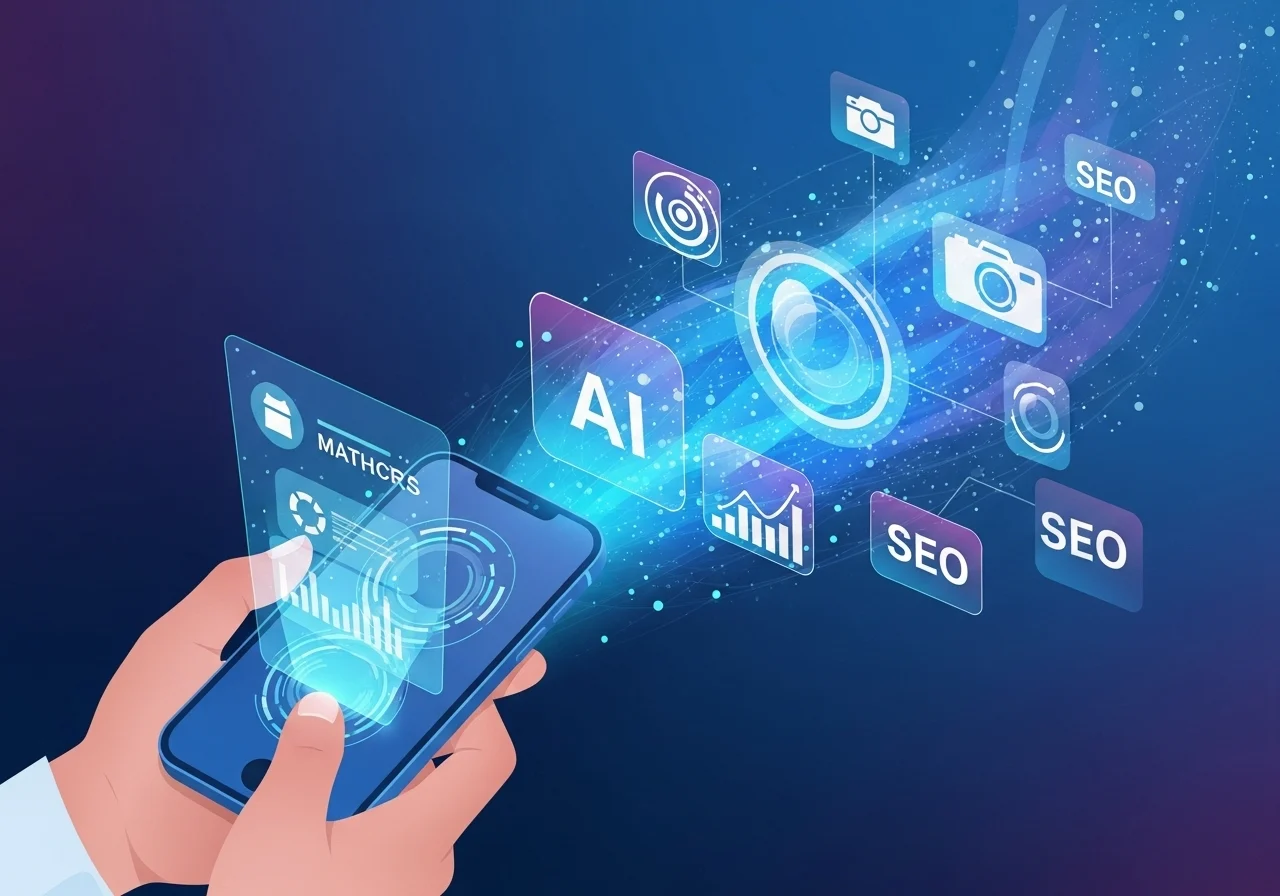
We’re only seeing the beginning. Here’s what’s next you can expect:
- Improved AI recognition: AI can already identify colors, shapes, and textures; next comes emotion and intent.
- AI-driven personalization: Visual search will serve results based on personal preference and history.
- AR and VR integration: Virtual try-ons and 3D product mapping will merge visual search with immersive experiences.
- Multimodal search: Users will combine image, text, and voice queries for richer, faster results.
- Generative visual SEO: Brands will soon optimize not just for images they upload, but for images AI generates from prompts.
The takeaway: SEO is no longer just about words; it’s about how your visuals communicate meaning.
Challenges and Ethical Considerations
Visual search also comes with challenges:
- Copyright and image ownership issues
- Duplicate image risks
- Bias in AI recognition models (e.g., misidentifying diverse products or faces)
- Privacy concerns in UGC and visual data
- Over-optimization that feels inauthentic
Responsible visual search optimization means balancing visibility with ethics.
EvenDigit Helps You Stay Ahead of the Curve
At EvenDigit, we help brands get future-ready with visual-first SEO strategies that align creativity with conversion. Our approach includes:
- Full-funnel visual SEO audits
- AI-powered image optimization and schema implementation
- Performance tracking and continuous iteration
- Cross-channel integration with social, paid, and organic campaigns
We don’t just make your brand discoverable, we make it unmissable. Connect with our SEO experts to see how your visuals can start ranking in image and visual search results.
FAQs
- What is visual search integration in SEO?
It’s the process of optimizing your website’s images so search engines can understand and display them in visual search results. - How does AI visual search impact digital marketing?
AI visual search helps brands appear in “search what you see” results, increasing discoverability and driving faster conversions. - What are the best practices for visual search optimization?
Use descriptive file names, detailed alt text, schema markup, image compression, and authentic high-quality visuals. - Is image search SEO still relevant in 2026?
Yes. Image SEO is more powerful now because it feeds both traditional image results and AI-powered visual search engines. - How can brands prepare for future visual search trends?
Invest in AI-friendly visuals, build visual sitemaps, and keep your site mobile-optimized with structured image data.