Snapshot of the blog: YouTube CTR measures how many people clicked your video after seeing it. A good YouTube CTR benchmark falls between 4% and 10% for most creators. Your niche, audience strength, thumbnails, titles, and impression sources all influence your CTR. To increase it, focus on strong visuals, curiosity-driven titles, clear storytelling angles, and consistent testing inside YouTube analytics.
Introduction
YouTube CTR is one of the most important video marketing metrics, yet most creators misunderstand what affects it and what a “good” number actually looks like.
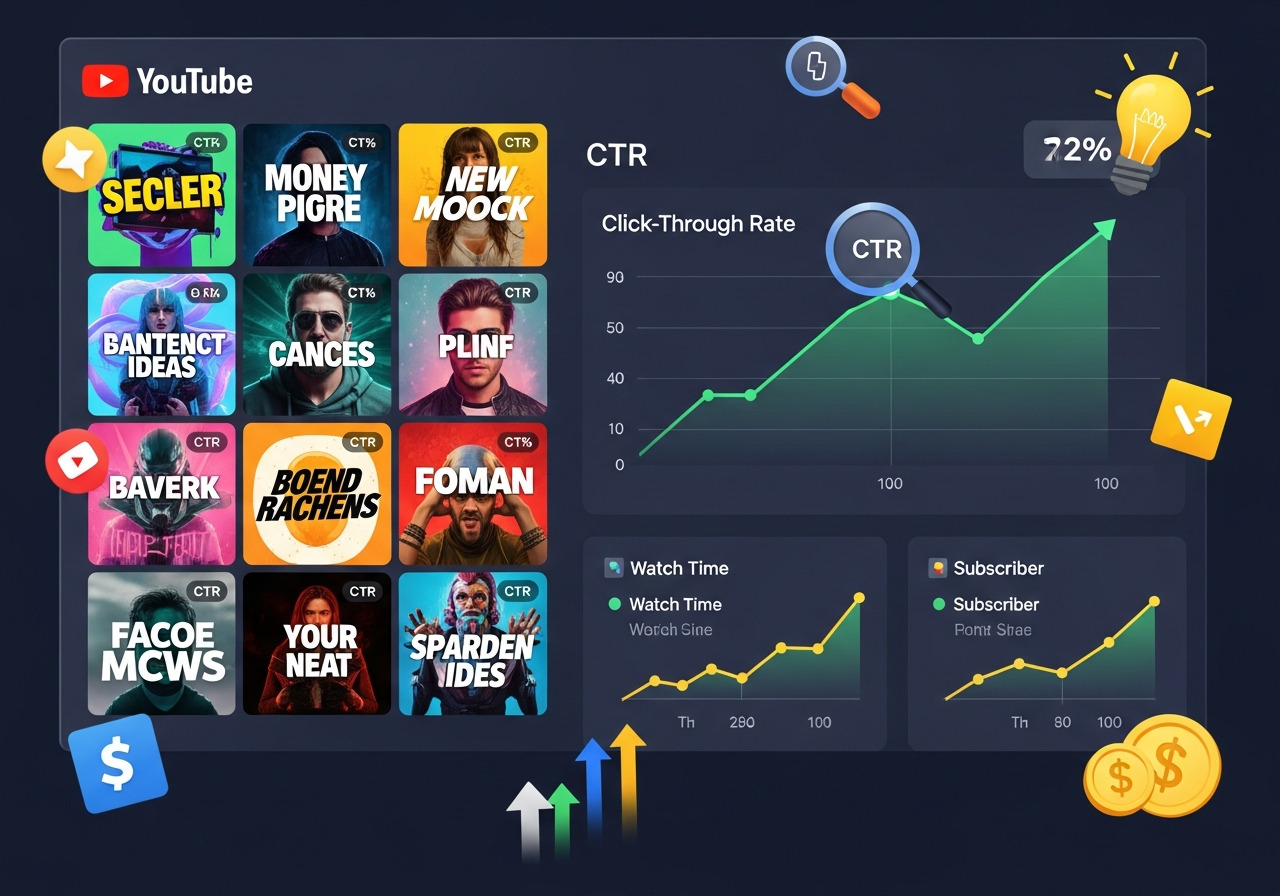
This guide breaks everything down in simple language, so you know how CTR works, how to measure it, and how to improve it using realistic and actionable steps.
What Is YouTube CTR and Why Does It Matter?
YouTube CTR shows how many viewers clicked your video after seeing the thumbnail or title. This metric is powerful because it tells YouTube how attractive your video appears inside the feed. When CTR rises, the algorithm sends the video to more viewers. When CTR drops, distribution slows.
CTR is calculated with a simple formula:
CTR = (Clicks ÷ Impressions) × 100
If you receive 1,000 impressions and 50 clicks, your CTR is 5%. This number becomes a signal for visibility, reach, and long-term performance.
Understanding the YouTube CTR Benchmark in 2026
Before diving into tactics, you need to understand the real range that creators see today.
Most creators fall between 2% and 10%. That is a wide range, and it varies for many reasons. Some videos hit 12% or more when the audience is loyal or the topic is narrow. Broad topics tend to pull CTR down as impressions spread to viewers who may not care.
In simple terms:
- Below 2% is usually low.
- Between 4% and 10% is considered good..
- Above 10% is strong.
- Beyond 15% often signals a highly engaged niche.
Your area of content influences these numbers. A broad entertainment channel behaves differently from a channel about finance, gaming, beauty, or career training. For that reason, treat benchmark values as reference points rather than strict rules.
Why CTR Drops Over Time in YouTube Analytics?
Many creators feel confused when a new video launches at 12% CTR, then falls to 5% a day later. This is normal. YouTube shows your video to your warmest audience first, so early impressions come from people already familiar with you. They are more likely to click.
As impressions expand, the audience becomes colder. New people may be less interested, which naturally lowers CTR. The platform looks for a balance between engagement and reach. A steady CTR of 4% to 8% is a sign that your video is healthy.
How CTR Affects the YouTube Algorithm?
YouTube uses CTR to decide whether your video deserves more visibility. The rule is simple. When viewers choose your video over others, YouTube recommends it more. When viewers ignore the thumbnail or title, impressions slow down.
CTR alone cannot make a video go viral. It works together with other video marketing metrics, such as:
- Watch time
- Average view duration
- Audience retention
- Engagement signals like likes and comments
- Returning viewer percentage
High CTR with weak retention does not help. YouTube wants viewers to click and then stay. That is why you should focus on the entire experience, not only the thumbnail race.
What Impacts YouTube CTR the Most?
To increase CTR, you must know what affects it. Several factors influence how viewers react to your video inside the feed. Each one plays a different role, and together they shape your YouTube analytics.
1. Thumbnails and Visual Story Cues
A thumbnail works like advertising. It needs clarity, contrast, emotion, and a clear focal point. The design must speak for itself, even at a small size.
2. Strong Title Hooks
Your title sets expectations. If it creates curiosity and gives a clear promise, viewers feel compelled to click. Weak titles reduce CTR even when the content is strong.
3. Topic Demand and Viewer Curiosity
Some topics naturally generate high CTR because the demand is strong. Others have lower CTR because the interest is niche. The topic’s strength matters more than design in many cases.
4. Impression Sources
CTR is shaped by where viewers find your content. For example:
- Home feed impressions often have lower CTR.
- Subscription feed impressions tend to be higher.
- Search impressions vary by keyword strength.
- Suggested videos depend on how well your topic pairs with other content.
Understanding these differences helps you interpret your numbers accurately.
5. Audience Fit
If your video is slightly off-topic for your channel, CTR drops. Content aligned with your audience’s expectations always performs better.
How to Improve YouTube CTR: Practical and Proven Tips

Here are some video engagement tips you can apply immediately. Each tip works because it aligns with viewer psychology and data from real YouTube analytics patterns.
1. Improve Thumbnail Clarity
A good thumbnail is easy to read and understand in one second. Avoid overcrowding. Keep your text short. Use contrast between the subject and background. Make your image crisp so it stands out in the feed.
2. Use Titles that Tell a Clear Story
Many creators write titles that sound clever but say nothing. A good title communicates the problem or promise instantly. Use curiosity in a way that respects the viewer’s time. Avoid vague hooks.
3. Test Variations Frequently
One of the most powerful habits is testing thumbnail versions. Small changes often lead to big improvements. YouTube makes it easy to replace or experiment with designs over time.
4. Study High-Performing Videos in Your Niche
Look at the videos ranking for your topic. Study their thumbnails, colors, emotions, wording, and subject placement. Trends reveal what your audience responds to.
5. Align the Visuals with the Topic
If your thumbnail and title do not match the topic, CTR will drop. Always test alignment. This is one of the most common mistakes creators make.
6. Use Faces When Possible
Human faces attract attention because people respond to emotion. Expressive faces often beat graphic designs in most niches. They help viewers understand the tone immediately.
7. Improve Your First 10 Seconds
Better opening scenes keep viewers watching. When retention improves, YouTube gives more impressions. More impressions provide more chances for clicks.
Why Some Videos with Low CTR Still Perform Well?
CTR is important, but it is not the only measure of success. Some videos get low CTR but maintain strong watch time, which helps them grow slowly and predictably. YouTube rewards retention and satisfaction even when CTR lags. Educational channels often fall into this category.
For example, a tutorial that solves a specific problem may attract only a small audience, but those who click stay longer. YouTube sees this and continues recommending it for months.
This is why your video marketing metrics must be read together instead of relying on one number.
How Niche Influences CTR Range?
Different types of content behave differently. Here are some realistic examples of niche-based CTR patterns:
- Finance channels often see 3% to 7% because topics are competitive.
- Beauty and lifestyle creators may see 6% to 12% due to a strong emotional connection.
- Gaming channels vary widely depending on the game’s popularity.
- Educational creators often remain stable between 4% and 8%.
- Short-form channels sometimes exceed 15% due to focused intent.
Treat these numbers as references, not final targets.
How to Read CTR Inside YouTube Analytics?
YouTube analytics offers detailed insight into CTR. You can see impressions from home, search, suggested videos, external sources, browse features, and channel pages.
Here is how to use this data:
- Compare CTR by impression category instead of overall CTR.
- Look at CTR during the first 48 hours to understand the initial response.
- Compare CTR between high-retention videos and low-retention videos.
- Identify thumbnails that drive more suggested impressions.
- Study patterns from older videos that still grow.
When you understand how different sources behave, you know where to improve.
How CTR Connects to Watch Time and Retention?
CTR tells YouTube how appealing your video looks. Retention tells YouTube how valuable your video is after the click. Both work together.
If you raise CTR but retention drops sharply, YouTube will reduce impressions. If retention is strong but CTR is low, YouTube may still give your video small but steady growth.
The best videos achieve balance. They attract clicks and hold attention.
Common Mistakes Creators Make When Trying to Improve CTR
You can avoid several pitfalls that hurt performance:
Mistake 1: Overusing text on thumbnails
Too much text overwhelms viewers.
Mistake 2: Titles that overpromise
This leads to high CTR but poor retention.
Mistake 3: Ignoring impression sources
Overall, CTR hides important patterns.
Mistake 4: Choosing design trends over clarity
Clear always beats clever.
Mistake 5: Misjudging viewer intent
You need a strong match between topic and audience expectations.
Realistic Examples of CTR Situations
Here are a few scenarios that help you understand how CTR behaves.
Example 1: High CTR and High Retention
Video explodes and reaches wide audiences.
Example 2: High CTR and Low Retention
Viewers click but lose interest. YouTube restricts impressions soon after.
Example 3: Low CTR and High Retention
Slow and steady growth that continues for months.
Example 4: CTR Drops Over Time
Normal behaviour as impressions expand to colder viewers.
These examples help you interpret your YouTube analytics more clearly.
Tips for Getting Better CTR Over Time
If you want sustainable improvement, follow these habits:
- Study the top 10% of your own videos.
- Optimise thumbnails regularly.
- Track CTR across niches, not only your channel.
- Test word combinations in titles.
- Treat thumbnails as your creative flagship.
- Create templates that viewers recognise.
- Build a clear identity that stands out.
These habits shape long-term success.
Ready to Grow Faster with a Data-Driven Strategy?
Improving CTR is not guesswork. It needs clarity, design psychology, and smart analysis. If you want real growth with predictable results,
EvenDigit social media experts help you build a YouTube strategy that aligns with your goals. We optimise thumbnails, titles, audience targeting, and analytics to increase visibility and engagement. Our team blends creative insights with data, so you can grow your channel with confidence.
Let’s connect and raise your CTR, improve retention, and build a stronger presence on YouTube.