
Summary
Voice search is changing how users find answers. To win visibility, you need conversational content, mobile speed, local accuracy, and structured data. This guide covers the latest voice SEO strategies, voice search SEO tips, and technical steps to optimize for voice search in 2025.
Introduction
People are no longer typing short keywords. They’re speaking complete questions to their phones, smart speakers, and cars. That means your website needs to understand how people talk, not just how they type.

Voice search optimization isn’t just a tech trend. It’s a fundamental part of smarter SEO. Let’s break down exactly how to prepare your content and structure so your business ranks in both traditional and voice-driven search results.
What Is Voice Search Optimization?
Voice search optimization means making your content and website easy for voice assistants like Google Assistant, Siri, and Alexa to find, read, and quote.
When someone asks, “What’s the best Italian restaurant near me?” or “How do I fix a leaking tap?”, the assistant pulls the most relevant answer from online content. If your website is optimized with natural, conversational language and clear answers, it becomes the chosen voice result.
Key elements include:
- Conversational keyword targeting
- Local and mobile optimization
- Structured data (schema) for clarity
- Fast-loading, mobile-friendly pages
- Easy-to-understand answers in 40–60 words
Why Voice Search Matters For Local And Mobile Users?
More than 50% of voice searches are local. People use them while driving, shopping, or searching for nearby services.
To rank for local voice queries, your business must appear credible and easy to find.
Here’s how:
- Optimize your Google Business Profile with the correct name, address, phone number, and hours.
- Add local keywords in meta tags, headings, and schema. For example, “affordable yoga classes in Pune” instead of just “yoga classes.”
- Encourage positive reviews on Google and Yelp, since assistants often prefer brands with higher ratings.
- Keep content mobile-first so that users who search on phones can load and interact easily.
Voice and local SEO go hand in hand. If you master one, you strengthen the other.
3 Expert Voice SEO Strategies For 2025
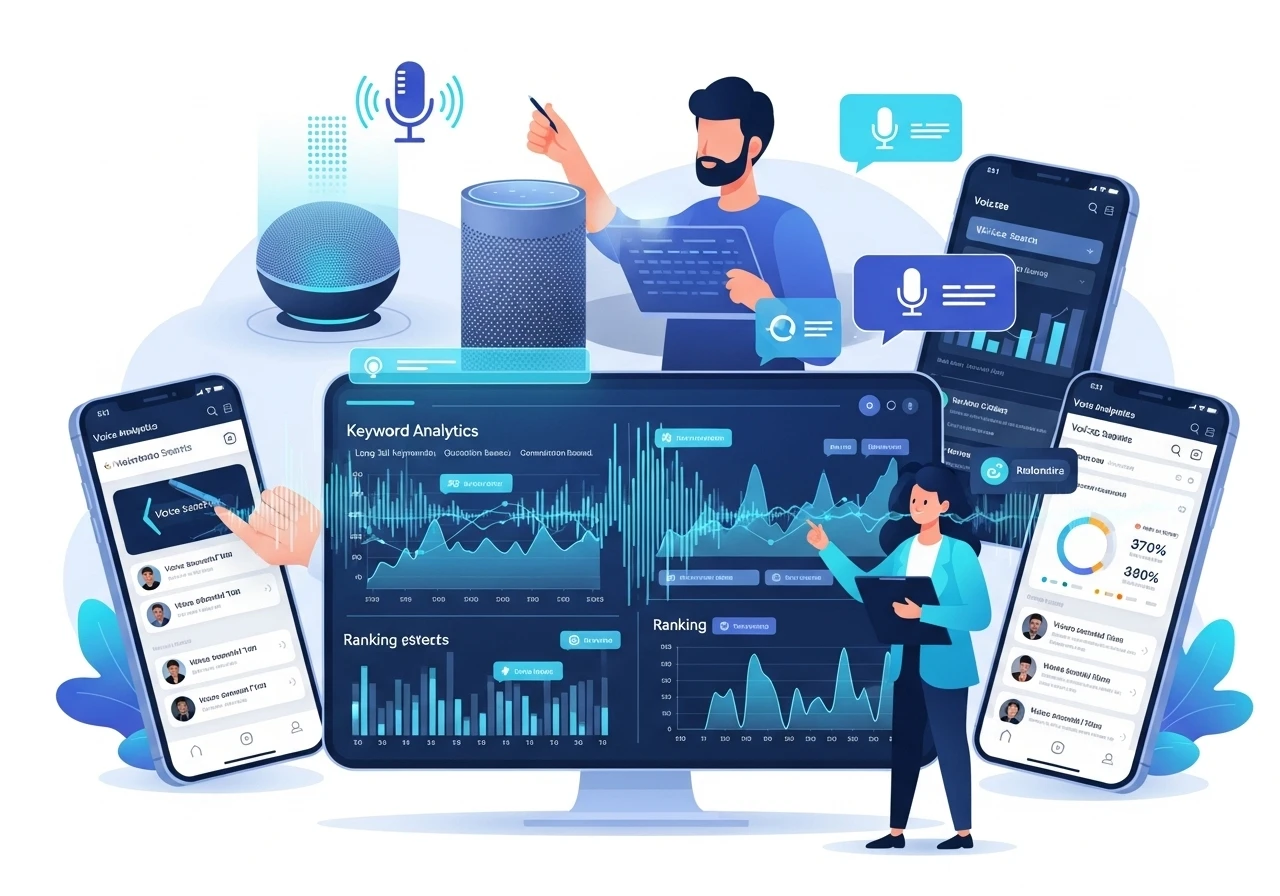
Voice SEO in 2025 is about clarity, structure, and natural flow. Forget robotic keyword stuffing. Write how people actually speak.
1. Map Questions To Entities And Tasks
Every voice query starts with intent. Focus on who, what, where, when, and how questions.
Example:
- “Who offers pet-friendly hotels in Dubai?”
- “How do I clean linen curtains safely?”
Map these questions to specific entities (places, products, services) and create pages or sections that answer each clearly.
2. Create Definition Blocks And Short Answers
Assistants prefer short, direct responses. Add 40–60-word answer blocks at the start of key sections.
Example:
Voice search optimization helps your website rank for spoken queries by structuring content to match how people talk and ask questions.
This simple structure can make your page a featured snippet and voice answer.
3. Use Conversational Headings
Turn subheadings into spoken-style questions like:
- “How do I optimize for voice search?”
- “What are the best tools for voice SEO?”
This format improves both readability and voice result accuracy.
Voice Search SEO Tips For Featured Snippets And PAA
Featured snippets and “People Also Ask” (PAA) boxes are the top sources for voice answers.
To optimize for them:
- Write short, direct answers under question-based headings.
- Use lists, bullet points, or tables for clarity.
- Add comparison words like “best,” “top,” and “difference between” to trigger snippet-friendly phrases.
- Maintain factual accuracy, citations, and recent data to meet E-E-A-T standards.
Example:
Question: What is schema markup?
Answer: Schema markup is code that helps search engines understand your content better. It improves visibility in search results and voice assistants.
Structured Data To Optimize For Voice Search
Search engines love structure. Schema markup tells them exactly what your content means, not just what it says.
Add these schema types to improve visibility in voice answers:
- FAQPage for question-based sections
- HowTo for step-by-step tutorials
- LocalBusiness for local results and “near me” queries
- Product for e-commerce listings
- Article and Breadcrumb for clarity and navigation
Validate schema using Google’s Rich Results Test and update quarterly. Proper markup helps your pages appear in both AI overviews and voice results.
Technical Requirements To Optimize For Voice Search
The best content fails if your website loads slowly or breaks on mobile.
Here’s your checklist:
- Page speed under 3 seconds (use Google PageSpeed Insights)
- Responsive design for all screen sizes
- Core Web Vitals in green zone (LCP, INP, CLS)
- Clean URLs and site hierarchy
- Secure HTTPS connection
- Accessible elements like alt text, captions, and transcripts
Remember: voice users expect instant results. Speed equals ranking power.
Content Patterns That Win Voice Search Optimization
Great voice SEO content feels like a conversation, not a lecture.
Q&A Sections Built From Real Queries
Pull questions from “People Also Ask,” Quora, and your own site search logs.
Answer each in short, clear language using natural phrasing.
Step-By-Step Guides And Checklists
Create concise guides that voice assistants can easily read aloud.
Example: “How to reset your smart thermostat in 3 steps.”
Local Landing Pages That Answer Spoken Needs
Add neighborhood names, landmarks, and service areas naturally within your copy.
Example: “Our salon in Koregaon Park offers late-night appointments.”
How To Optimize For Voice Search In Google Business Profile
Your Google Business Profile (GBP) is often the first thing assistants pull data from.
To optimize it:
- Pick the most appropriate primary and secondary categories
- Add updated business hours, holiday hours, and photos.
- Use detailed service descriptions and attributes.
- Reply to reviews consistently.
- Add Q&A responses directly on your profile.
This boosts visibility when users say “near me” or “best in my area.”
Measurement For Voice And AI Summaries
Voice search success isn’t measured only by clicks. You need to track presence in featured snippets, local packs, and AI-generated overviews.
Track:
- Featured snippet ownership rate.
- “People Also Ask” inclusion frequency.
- Local pack impressions and direction requests.
- Mentions or citations in AI Overviews (track manually using screenshots or tools like SEOClarity).
Evaluate progress quarterly. Over time, aim to own answers in both traditional and conversational search layers.
Common Mistakes To Avoid In Voice SEO Strategies
Even strong websites fail when they overlook these essentials:
- Writing robotic, keyword-heavy copy.
- Skipping schema or local details.
- Ignoring page load speed and mobile usability.
- Forgetting E-E-A-T elements like author bios and references.
- Neglecting to refresh FAQs and snippets every quarter.
Voice optimization is ongoing. The moment you stop updating, your competitors take your spot.
Implementation Checklist To Optimize For Voice Search
Use this recurring checklist every quarter:
- Audit your top pages for conversational phrasing
- Add or update FAQ schema
- Validate Core Web Vitals and mobile speed
- Refresh GBP and local content
- Track featured snippet wins
- Review “People Also Ask” updates
- Add new question-based sections from search trends
Small, consistent improvements keep your pages visible in evolving AI-driven search.
Build A Voice-Ready SEO Program with EvenDigit
Voice search, local SEO, and AI-driven search are now interconnected. To stay visible, brands must merge creativity, structure, and analytics.
At EvenDigit, our SEO expert team creates conversational content, implements schema, and builds site structures that align with how AI and people search today. Let’s plan your next voice-ready SEO strategy together.
Frequently Asked Questions
What Is Voice Search Optimization?
Voice search optimization is the strategy of making your website visible for spoken queries through conversational content, structured data, and technical optimization.
How Do I Optimize For Voice Search Without Hurting SEO?
Focus on natural phrasing, schema markup, and concise answers. These improve both traditional SEO and voice ranking.
Which Schema Types Help Voice Answers?
FAQPage, HowTo, LocalBusiness, and Product schema are most effective.
What Content Works Best For Voice Queries?
Question-based articles, tutorials, and concise definitions with verified facts.
How Do I Track Voice Search Results?
Monitor featured snippets, “People Also Ask” inclusion, and GBP insights for local results.
How Often Should I Update Voice Content?
Every quarter. Refresh FAQs, schema, and local keywords to stay relevant.