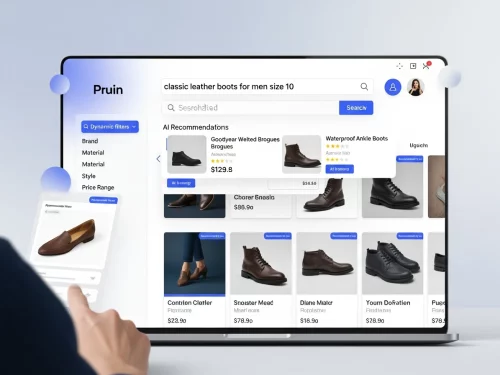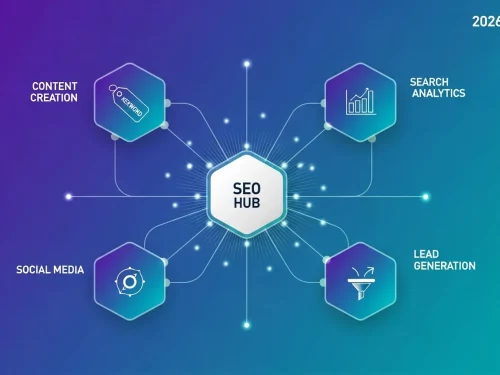

Concise Summary: AI upgrades e-commerce SEO by automating large catalog tasks, improving product and category content, fixing technical issues at scale, and preparing pages for AI Overviews. Use this guide to choose projects that matter, apply best practices safely, and prove impact.
Introduction
It’s 2025, and AI is not only used to spin text. In e-commerce SEO, it speeds up keyword clustering, strengthens product and category content, flags technical issues across thousands of URLs, and helps structure pages so search engines and AI Overviews can cite them with confidence.

This guide turns AI from a list of tools into a practical workflow. You will see what AI can do today, how to pick projects that move revenue, and how to ship with guardrails so quality stays high.
What AI Is Doing For E Commerce SEO?
AI adds speed and scale to tasks that used to require hours of manual work. Use it to lift coverage, consistency, and crawl efficiency while keeping humans in control of quality.
1. Entity-Based Keyword Discovery and Clusterin
Group queries by product entity, use case, and intent so categories and filters match how shoppers search.
2. Helpful on Page Copy at Scale
Draft PDP benefit blocks, PLP intros, and buying guide snippets, then gate them through brand voice and duplication checks.
3. Internal Linking Suggestions
Propose hub and spoke connections with natural, entity aligned anchors to lift crawl and discovery.
4. Technical Audits and Rules
Surface duplicate variants, weak parameter logic, thin tag pages, and propose canonical and robots solutions for human review.
5. Schema Consistency and Feed Alignment
Validate Product, Offer, Review, and FAQ schema so organic and shopping surfaces share one truth.
How To Choose AI Projects That Move Metrics
Not every AI idea deserves a sprint. Pick projects that touch high-value templates and tie directly to revenue or coverage, then define owners and guardrails before you ship.
- Map to business goals: Decide if you need richer results on PDPs, more category visibility on PLPs, or better conversion from educational guides.
- Prioritize by impact and effort: Start with templates that touch many URLs and influence revenue, such as PDPs and top categories.
- Assign owners and QA: Give SEO, content, and engineering clear roles for prompts, review, and publishing.
- Prepare rollback paths: Use version control and staging so you can revert template changes fast if results dip.
9 AI SEO Best Practices Every E-commerce Store Should Follow
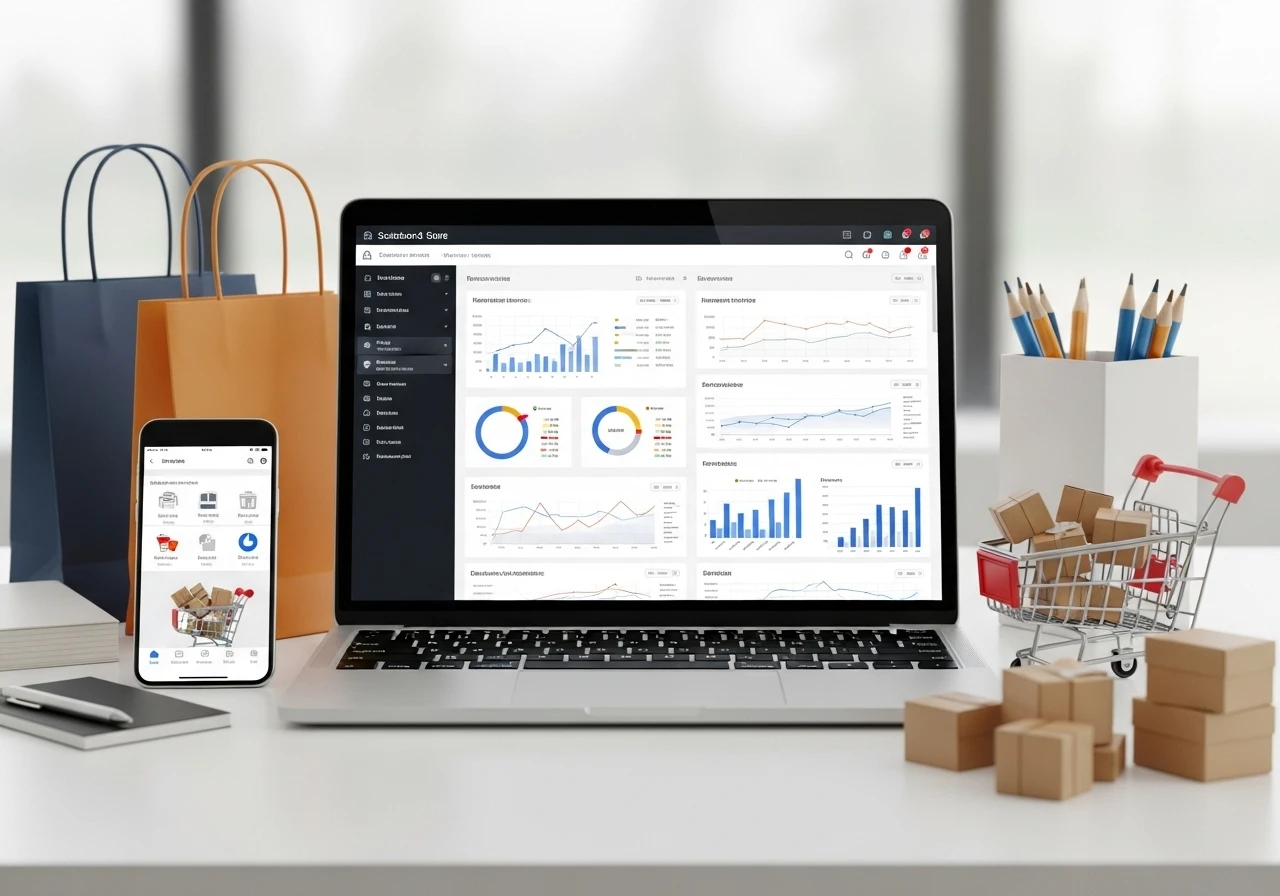
Think of best practices as a safety net that keeps AI helpful and on brand. Each area below starts with a simple idea you can roll out fast, then builds toward scalable routines.
1. Fix Technical SEO At Catalog Scale With AI Assistance
Start by clearing the crawl path. Let AI surface candidates and patterns while humans make the final call on rules.
- Tame faceted navigation: Use AI to list crawlable parameter combinations, then propose rules for canonical, noindex, or disallow. Review and implement safely.
- Unify duplicate variants: Detect color or size variants that deserve a parent page. Generate consolidation plans and consistent canonical tags.
- Reduce crawl waste: Read server logs and let AI draft a candidate block list of low-value paths, such as endless filters or legacy print views.
- Speed per template: Ask AI to summarize Core Web Vitals bottlenecks for PDP, PLP, and guide templates. Prioritize fixes like image formats, critical CSS, and script deferral.
2. Generate Product And Category Content With Quality Gates
Use AI to draft at scale, then protect quality with brand checks, citations, and duplication scans before anything goes live.
- PDP micro blocks: Create benefit bullets, compatibility notes, and spec summaries that answer buyer questions.
- PLP intros and buying guide snippets: Explain who the category is for, how to choose, and which features matter.
- Brand and compliance filters: Enforce tone, prohibited claims, and required references. Reject anything that cannot be verified.
- Refresh cadence: Schedule periodic checks so price, availability, and claims remain accurate.
3. Build An Internal Linking Graph That Scales
Internal links are your controllable authority flow. AI can propose connections you might miss, and your team can approve the best ones.
- Hub to spoke linking: Connect category hubs to PDPs and related guides using descriptive anchors that reflect entities.
- Rotate anchors safely: Keep anchors human and varied. Favor product names, uses, and attributes over repetitive keywords.
- Fix orphans: Identify PDPs with few or no internal links and attach them to relevant clusters.
- Improve crawl paths: Use breadcrumb and related product logic to shorten click depth without creating loops.
4. Enforce Product Schema And Align With Merchant Center
Consistency between page markup and feeds builds trust. Use AI to audit and suggest fixes so search and shopping surfaces match.
- Validate Product schema: Ensure Offer, price, availability, Review, and AggregateRating are complete and consistent.
- Use FAQ or HowTo only when valid: Add structured answers or steps that a human has verified. Remove if the content becomes stale.
- Sync with feeds: Keep site schema and Merchant Center attributes in agreement so search and shopping surfaces show the same data.
- Richer media details: Supply high-quality images with clean backgrounds, video objects with transcripts, and correct GTIN where applicable
5. Prepare Content For AI Overviews And Generative Search
Design sections that answer questions directly. Clear definitions and tables help models cite you and help shoppers decide faster.
- Concise definition blocks: Place short, accurate definitions and verdicts near the top of guides.
- Comparison tables and steps: Summarize choices and how to buy, then link to detailed sections.
- Stable citations: Anchor claims to durable URLs and reference sources so AI systems can cite you cleanly.
- LLM seeding: Publish condensed versions of key sections on platforms that models crawl, then link back to the canonical guide.
6. Optimize Media With AI For Better CTR And Engagement
Visuals drive clicks and confidence. Let AI flag gaps and suggest small improvements that add up across the catalog.
- Descriptive alt text at scale: Generate alt text that describes the product and context without stuffing.
- Angle coverage: Audit image sets for missing views, lifestyle shots, and size scale.
- Thumbnails and first frames: Choose the frame that shows the product clearly, then test CTR in organic and internal modules.
- Short demos: Create quick clips that show setup or use. Embed on PDPs to improve dwell and clarity.
7. Run Programmatic SEO With Guardrails
Programmatic content wins when you control inputs and validate outputs. Treat templates as experiments; you scale only after they prove value.
- Templates for long tail collections: Generate copy only when the collection is stocked and useful.
- Quality gates: Check entities, references, duplication, and brand voice before publishing.
- Template tests: A or B test headings, intro length, and FAQ modules at the template level before scaling.
8. Measure Impact With Model-Aware KPIs
Measurement should connect template changes to visibility and revenue. Pick a small set of metrics and report them weekly.
- Rich result visibility: Track impressions and CTR for product and review results in Search Console.
- AI Overview sightings: Log appearances, citations, and assisted traffic from those queries.
- Crawl and render health: Use logs to verify crawl coverage and track render timing by template.
9. Ensure Governance, Compliance, And Brand Safety
Guardrails keep AI useful and safe. Document prompts require citations and keep humans in the loop where the stakes are high.
- Prompt libraries and versioning: Store prompts with examples and keep outputs in version control.
- Hallucination prevention: Require citations for claims and keep price and inventory synced with the source of truth.
- Human signoff: Route content with legal or safety implications through manual approval.
- Rollback ready: Document changes and keep a simple path to revert if quality or traffic drops.
Comparison Table: AI Tasks, Impact, Effort, And Risks
| Task | Where It Applies | Expected Impact | Main Risks | Effort Level | QA Required |
|---|---|---|---|---|---|
| Facet Rule Proposals | PLPs, parameter URLs | Higher crawl efficiency | Overblocking valuable paths | Medium | SEO and Dev signoff |
| Variant Consolidation | PDP clusters | Stronger canonical signals | Loss of long tail variants | Medium | Merch and SEO review |
| PDP Micro Blocks | PDPs | Better relevance and answers | Inaccurate claims | Low | Content and Compliance |
| Internal Link Suggestions | PDPs, PLPs, guides | Faster discovery and depth | Over optimized anchors | Low | SEO spot checks |
| Schema Validation | PDPs and PLPs | Richer results and CTR | Inconsistent data with feed | Medium | SEO and Merch |
| LLM Seeding | Guides and hubs | More citations in AI Overviews | Off brand placements | Low | Content and Brand |
| Media Optimization | PDPs and PLPs | Higher CTR, better dwell | Heavy assets slow pages | Medium | Dev and Design |
| Template A or B Tests | PDP or PLP templates | Measurable CTR and CVR lift | Small samples, false winners | Medium | Analyst review |
Prompt Packs You Can Reuse Safely
Use these prompts in generative AI tools and personalize them for desired results:
Technical Prompt:
“Read this list of URLs with parameters and identify patterns that should be canonical to a clean path, noindex, or disallowed. Output three rule sets, each with a human-readable explanation and examples. Do not suggest blocking any path that lists valuable products.”
Content Prompt:
“Write a PDP benefit block for [Product]. Use brand tone, include one primary benefit and two supporting points, and avoid superlatives. Cite the spec or source for any claim. Limit to 70 words.”
Linking Prompt:
“Given this hub page and five PDPs, propose internal links with descriptive anchors that reflect real attributes or use cases. Avoid repeating the same anchor. Return a table with source URL, target URL, and anchor.”
Schema Prompt:
“Validate Product schema for this PDP against visible price, availability, and review count. List any mismatches and provide a corrected JSON-LD snippet. Do not invent values.”
Test Plan Matrix For PDPs, PLPs, And Guides
Adjust sample sizes to your traffic and seasonality. Always run tests to a clear decision rule.
| Template | Hypothesis | Variant A | Variant B | Minimum Sample | Primary Metric | Decision Rule |
|---|---|---|---|---|---|---|
| PDP | Shorter intro lifts CTR to specs | 120 word intro | 60 word intro with bullets | 500 sessions per arm | PDP CTR to specs module | 8 percent or more lift |
| PLP | Definition block improves SEO CTR | No intro text | 40 word definition at top | 3k impressions per arm | Organic CTR | 10 percent or more lift |
| Guide | Comparison table increases engagement | Paragraph only | Table plus paragraphs | 1k sessions per arm | Time on page and next page rate | Significant lift on both |
Weekly And Monthly Checklists
Weekly SEO Ops
- Review crawl logs for new waste patterns
- Fix orphaned PDPs and stale redirects
- Diff schema against feeds and correct mismatches
- Fill top query gaps with new or refreshed blocks
Content QA
- Spot check AI-generated copy for accuracy and tone
- Verify claims with citations or source systems
- Run duplication scans across PDP families
Media QA
- Ensure alt text coverage and readable file names
- Check thumbnail CTR on key categories
- Validate video playback and first frame clarity
Monthly Review
- Track AI Overview sightings and citations
- Audit rich result coverage by template
- Compare template performance to last month and last year
Turn AI Into Real Store Growth With EvenDigit
AI becomes valuable when it serves a clear goal and ships with guardrails. Our team prioritizes projects by revenue impact, installs prompt and QA systems, and measures outcomes so you can scale what works.
If you want a plan that turns AI into richer results, stronger category visibility, and more conversions, connect with EvenDigit SEO Experts. We will review your stack, map quick wins, and help your store grow with confidence.
Some Frequently Asked Questions
How Do I Use AI Without Publishing Low Quality Content
Keep humans in the loop. Add quality gates for entities, duplication, citations, and brand voice. Publish only what passes checks.
What Is The Safest Way To Roll Out AI Changes On PDP Templates
Test on a small set first, monitor Search Console and conversion, then scale. Keep rollback ready.
How Do I Align Product Schema With Merchant Center Attributes
Map fields one-to-one, validate against visible page data, and fix mismatches before feeds sync.
How Can I See If AI Overviews Cite My Store Content
Log sightings, check which sections are quoted, and improve definition blocks and tables that provide the cited facts.
Which KPIs Prove That AI Work Helped SEO And Sales
Track rich result impressions and CTR, crawl coverage improvements, add to cart rate, PDP conversion, and revenue per session.