

Organic search delivers over 53% of web traffic, and Google processes more than 8.5 billion searches every day. Yet 75% of users never reach page two. That means if your site does not rank in the top results, your audience never sees it.
In this guide, you will discover seven proven SEO frameworks backed by data and clear steps you can apply now to improve your website’s visibility and rankings.
1. Nail Your Technical SEO Foundations
Imagine your site as a car. Technical SEO is the engine and suspension. If it sputters, nothing else matters.
Optimize Core Web Vitals & Page Speed
A 1-second delay in page load can slash conversions by 7% (Akamai). Compress images, minify CSS and JavaScript, and cache strategically.
Add a CDN. It stores your files on servers around the world so every visitor gets lightning-fast load times. Aim for a Largest Contentful Paint under 2 seconds and a First Input Delay under 100 ms.
Mobile-First & Responsive Design
Over 60% of searches happen on mobile. Test with Google’s Mobile-Friendly tool. Ensure text scales without zoom, buttons sit far enough apart for tapping, and no important content hides behind menus.
Secure, Structured URL Architecture
Switch your entire site to HTTPS. It’s a lightweight ranking signal and builds trust. Create clean URLs with keywords (e.g., /seo-frameworks instead of /page?id=123).
Submit an XML sitemap in Google Search Console and use canonical tags to prevent duplicate-content issues.
2. Master On-Page SEO: Keywords, Tags & Markup
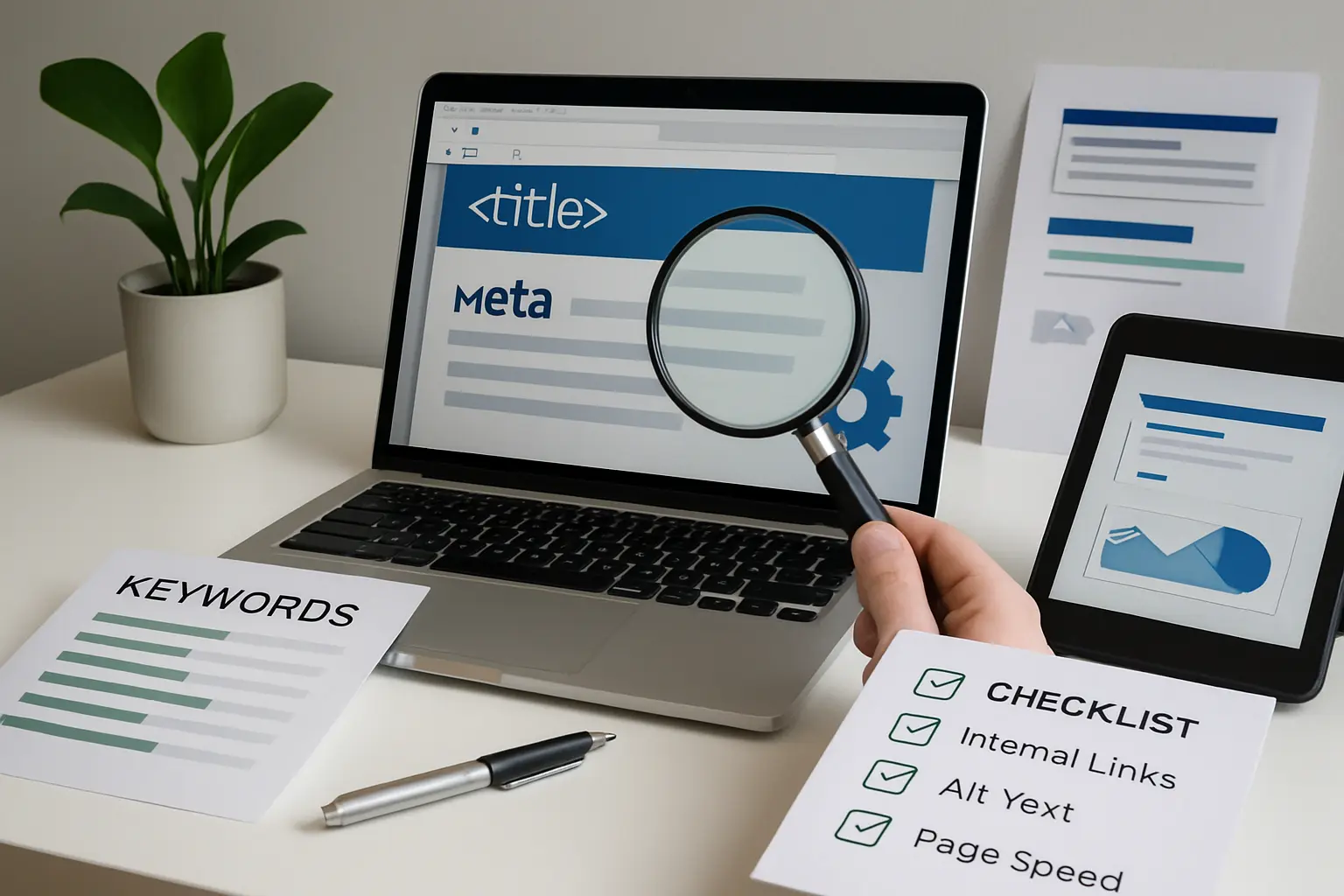
On-page SEO is where you signal relevance. It’s the difference between “just another page” and “the answer.”
Strategic Keyword Research & Intent Mapping
Pull real search data from Keyword Planner, Ahrefs, or SEMrush. Identify long-tail keywords with solid traffic and low competition. Think “enterprise SEO framework guide” over “SEO tips.” Then sort by intent:
- Informational: “what is an SEO framework”
- Transactional: “hire SEO consultant”
- Navigational: “Google Search Console login”
Irresistible Title Tags & Meta Descriptions
Your title tag is your first impression in search results. Keep it short, under 60 characters, front-load your main keyword, and add a power word (like “sure-shot,” “proven,” or “ultimate”).
Meta descriptions don’t impact rankings directly, but they can boost click-through rates. Aim for 150 – 155 characters that tease the benefit.
Smart Headings, Alt Text & Schema
Use H1 for your main headline, H2 for big sections, and H3 for subpoints. Slot keywords naturally. Always remember you’re writing for humans first.
Describe images with clear alt text (“screenshot of Core Web Vitals report”) so Google can index them. Add an FAQ or HowTo schema to qualify for rich snippets, which can lift click rates by 30% on average.
3. Create Magnetic, People-First Content
Content wins when it solves real problems. Make it deep, unique, and human.
Content Depth & E-E-A-T
Google values Experience, Expertise, Authoritativeness, and Trustworthiness. Share personal case studies: “When we cut image sizes by 70% for a client, load times dropped from 4 s to 1.8 s, boosting conversions by 12%.” Cite your sources, and show real numbers.
Topic Clusters & Internal Linking
Build a pillar page for your comprehensive, flagship guide. Then write supporting posts that delve into subtopics (like “technical SEO checklist” or “link-building outreach templates”).
Link them back to the pillar and to each other. This network of context spreads “link equity” and signals topic authority to search engines.
Regular Content Refreshes
Freshness matters. Schedule quarterly audits of your top pages. Add new stats, update examples, and refine your tips.
Moz found that updated content gains an average of 30% more organic traffic. Show Google you’re keeping information current, and users will thank you.
4. Elevate User Experience to Signal Quality

UX and SEO are the two sides of the same coin. A happy and time-spending visitor is a signal to Google algorithms that your page is highly valuable and deserves a higher spot.
Core Web Vitals & Interaction
Keep Largest Contentful Paint (LCP) under 2s, First Input Delay under 100 ms, and Cumulative Layout Shift below 0.1. Defer noncritical scripts and lazy-load images to maintain visual stability.
Intuitive Navigation & Engagement
Use clear menus and breadcrumbs so people don’t get lost. At the end of articles, show related posts or a simple call-to-action (“Download our free SEO audit checklist”). Encourage users to stick around instead of bouncing.
Accessibility & Design
Readable fonts, strong contrast, and meaningful alt text are non-negotiable. Avoid intrusive pop-ups that block content on entry.
Google’s Page Experience update penalizes sites with disruptive interstitials. Always keep your content accessible and user-friendly.
5. Build & Earn High-Authority Links Ethically
Links are votes of confidence. Aim for quality over quantity.
Quality Backlink Outreach & Guest Posts
Create link-worthy assets like original research, infographics, or free tools. Pitch these to niche publications. When you guest post, provide genuine value. Use natural anchor text like “SEO framework best practices” instead of stuffing keywords.
Internal Link Strategy
Place 3 – 4 contextual internal links per page. Connect related resources, such as a how-to post linking to your keyword research guide. This keeps visitors on your site longer and spreads SEO value.
Avoid Link Spam & Penalties
Stay clear of link farms, paid‐link schemes, and exact‐match anchor overuse. Google’s Penguin algorithm penalizes manipulative links. If you discover toxic backlinks, use Google’s disavow tool, but focus on building the right links from the start.
6. Leverage Analytics for Continuous Wins

Data drives decisions. Measure, adapt, repeat.
Google Search Console & Analytics Setup
Verify your site in Search Console and link it to Google Analytics. Monitor impressions, clicks, crawl errors, and mobile usability issues. Spot pages with high impressions but low clicks, then revamp their titles and meta descriptions.
KPI Tracking & Conversion Goals
Define clear and achievable goals, such as boosting organic traffic by 20% in six months, improving the bounce rate by 10%, or increasing form submissions. Track keyword position changes, traffic sources, and conversion rates to gauge progress.
Iterative Audits & Competitor Analysis
Conduct quarterly technical audits to identify broken links, duplicate content, and slow pages. Spy on competitors’ top-ranking pages: What topics do they cover? How many backlinks do they have? Use this intel to fill the gaps and fine-tune your strategy.
7. Stay Compliant with Google’s Essentials & Spam Policies
Play by the rules to avoid penalties and build lasting authority.
Crawlability & Indexability
Ensure important pages return HTTP 200 and aren’t blocked by robots.txt or meta noindex tags. Submit your sitemap and check the Coverage report in Search Console for errors.
Content Quality Compliance
Avoid thin or AI-only articles. Focus on “helpful, people-first content,” per Google’s guidelines. If you use AI tools, treat them as assistants. Always review and enrich outputs with your expertise.
Link & Security Best Practices
Label paid or sponsored links with rel=”sponsored” or rel=”nofollow”. Update your CMS, themes, and plugins regularly. That keeps hackers out. A secure site builds user trust and avoids malware warnings in search results.
Let’s Find the Best SEO Framework for Your Website
There’s no single trick that guarantees SEO success. Every site is unique. Industry, niche, USPs, and goals shape the strategy.
The right framework depends on your website’s DNA. Let EvenDigit’s SEO experts analyze your site and create a custom report showing what works for you.
Our team has strengthened SEO for hundreds of websites across various industries, including ecommerce, healthcare, fashion, SaaS, and more. We know what drives traffic and conversions, and how to multiply your SEO success.
We’ll assess your pages, pinpoint gaps, and build a framework tailored to your business.
Let’s connect with our experts today and get a free audit of your website. Discover the SEO framework that will skyrocket your rankings and growth.